
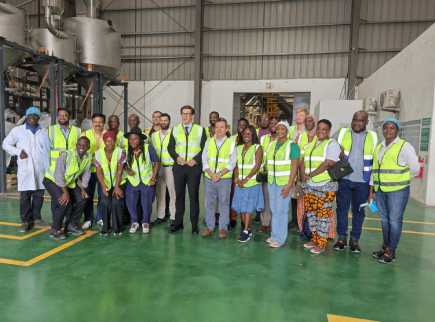
Ghana and Germany have been encouraged to strengthen cooperation in plastic waste recycling and management using the PET technology to promote a circular economy and protect the environment.
The polyethylene terephathalate (PET) recycling is a process of collecting, sorting, cleaning, and transforming discarded plastics, commonly used for water and soda bottles into reusable raw materials or new products.
Mr Frederik Landshöft, the German Ambassador to Ghana, said this during a tour of SARA rPET, the Mohinani Group’s flagship brand of recycled PET flakes and pellets, produced by their subsidiary, Polytank, in the Free Zones enclave at Tema.
He described the facility as Ghana’s only food-grade bottle-to-bottle PET recycling facility, where visitors were shown how used plastic bottles were processed into raw materials for bottle production.
The Ambassador said the facility demonstrated the potential of turning plastic waste into value locally, adding that the recycling chain – from collection and sorting to processing and manufacturing – would create stable jobs and strengthen local economies.
“Reusing processed plastic is significant for the circular economy. It helps factories turn old items into new goods like containers, clothing and building materials,” he said.
Mr Landshöft said Germany and Ghana could exchange ideas and best practices to address waste and pollution for the benefit of both countries.
Ghana is said to generate approximately 1.1 million metric tonnes of plastic waste annually and with a daily generation round 3,000 metric tonnes across the country.
Reports indicate that only about five per cent to 9.5 per cent of this plastic waste is collected and recycled, leaving the vast majority mismanaged.
Mr Girender Mohinani, Business Head, Polytank, called for concrete government policies to encourage the use of recycled materials and strengthen the country’s circular economy.
He said they had created value across the recycling chain, including for collectors and aggregators and policies such as minimum recycled-content requirements, incentives, improved standards and stronger collection infrastructure to help expand the industry.
Mr Mohinani said public education, proper waste sorting and PVC labels had been major challenges to PET recycling, explaining that PVC contamination could render batches of PET bottles unusable.
He said the company’s franchise collection network in Ghana could handle approximately 2, 000 metric tonnes of plastic waste per month, leading to an annual production of 13, 200 metric tonnes of recycled materials.
“The data shows that 3.6 million tonnes of plastic waste is generated annually in Nigeria and Ghana, with only nine per cent being collected for recycling,” the Business Head said.
“The social impact of SARA rPET project has been that there has been 30 per cent wage growth for recycling sector employees where 60 per cent are women and 52 per cent out of the 60 are major breadwinners of households.”