
Professor kąrî’ kạchä Seid’ōu, Dean, Faculty of Art, Kwame Nkrumah University of Science and Technology (KNUST), has urged government to prioritise art museums and galleries to preserve Ghana’s heritage and promote tourism and job creation.
He said investment in such infrastructure would safeguard historical artworks while boosting revenue and strengthening the creative economy.
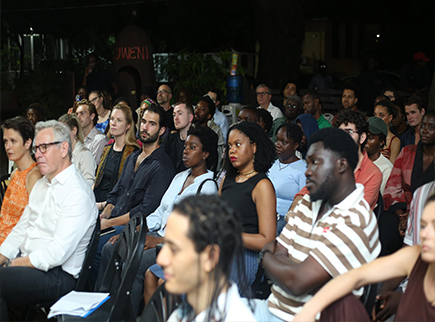
Prof Seid’ōu, made the call in an interview with the media on the sidelines of a conference on the art exhibition dubbed “One Man Does Not Rule a Nation,” in Accra.
The conference, organised by the Foundation for Contemporary Art-Ghana in collaboration with the TRAFO Centre for Contemporary Art, Szczecin, Poland, examined the rediscovered “Sword Monument,” its links to Kwame Nkrumah, and Ghana’s post-independence artistic collaborations.
It also explored vanished public artworks, their implications for collective memory, and Ghana-Poland cultural relations, including contributions by Polish sculptor Alina Ślesińska.
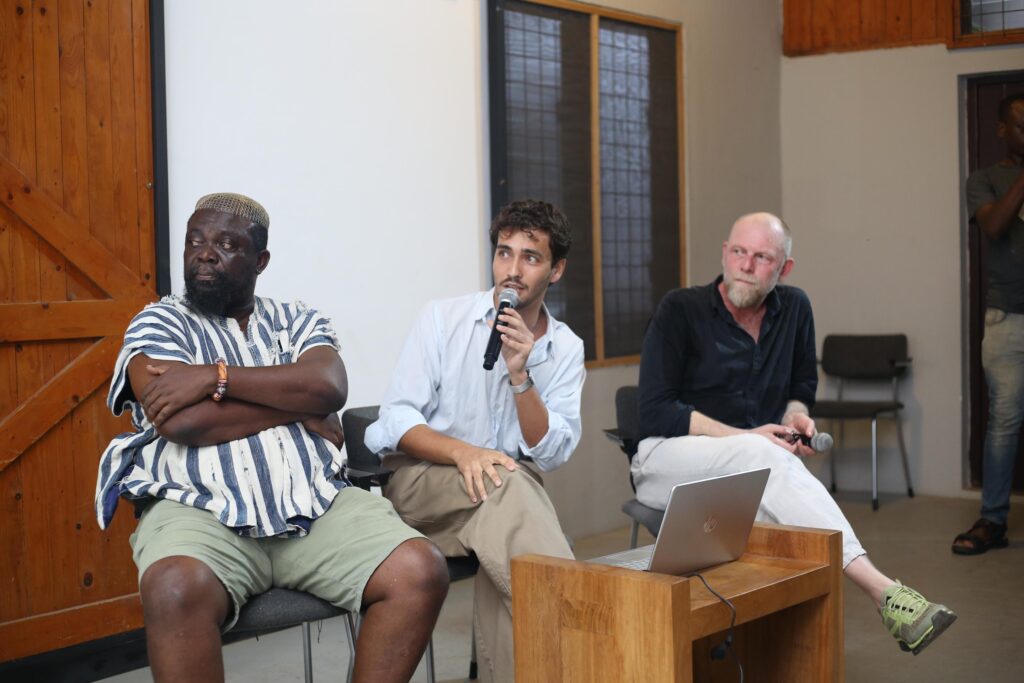
Supported by the European Union and Expertise France, the event further encouraged discussions on how monuments were commissioned, preserved and reimagined in contemporary society.
Prof Seid’ōu said although Ghana was experiencing a “golden age” of art, many historical artworks and sculptures remained at risk due to neglect and limited institutional support.
He said current successes were built on foundations laid during the Nkrumah era, citing global recognition of Ghanaian artists, including Ibrahim Mahama, as evidence of the country’s rising prominence.
“The successes we are chalking cannot be attributed to the present generation alone. For the first time, we have a peer-reviewed journal that lists the 100 most powerful figures in the art world.
“For the first time, an African has topped that list. Who is that? It’s somebody from Ghana, Ibrahim Mahama. It has never happened before. For the first time, there’s reference to art schools and artists in Ghana. It’s among the most fascinating we can ever find,” he explained.
Prof Seid’ōu expressed concern over the deterioration and loss of public sculptures, some dating back to the 1960s, and called for the creation of protected spaces for art beyond political and ideological changes.
“We must build the infrastructure for art. We need more museums and galleries where artists can show their work and educate future generations,” he said.
Prof Seid’ōu also called for stronger state support for individual artists, noting that sustained growth in the sector required deliberate public investment.
Adwoa Amoah, Co-Director of the Foundation for Contemporary Art–Ghana, highlighted the need to revisit Ghana’s artistic history through research and exhibitions.
She referenced a 2025 exhibition held in Accra and Tamale titled “One Man Does Not Rule a Nation,” which explored the largely forgotten “Sword Monument” commissioned in 1965 and lost after the 1966 overthrow.
“This vanished monument is generating conversations about art, history and how we value creative expression in our society,” she said.
Ms Amoah said the initiative had sparked debate on whether such monuments should be reconstructed and how public art should evolve to reflect contemporary Ghanaian identity.
She also raised concerns about poor maintenance of public artworks in Accra and Kumasi and called for renewed investment to preserve Ghana’s cultural legacy.