
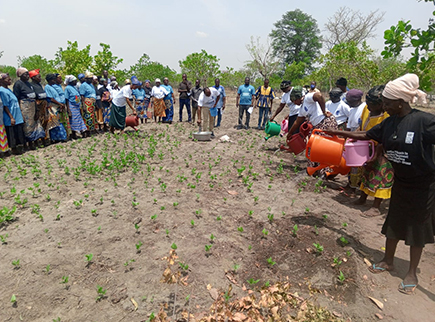
The Community Development Alliance (CDA), in partnership with the United Nations Development Programme (UNDP), has commissioned an irrigation facility in Saru, a border community in the Sawla-Tuna-Kalba District, to strengthen livelihoods, promote social cohesion, and build community resilience.
The initiative aims to address drivers of conflict, insecurity, and socio-economic vulnerabilities while providing livelihood opportunities for vulnerable groups, especially women and youth. The project is part of the “Prevention Facility for the Gulf of Guinea” implemented by CDA in select border communities, with funding support from the government of Japan through UNDP.
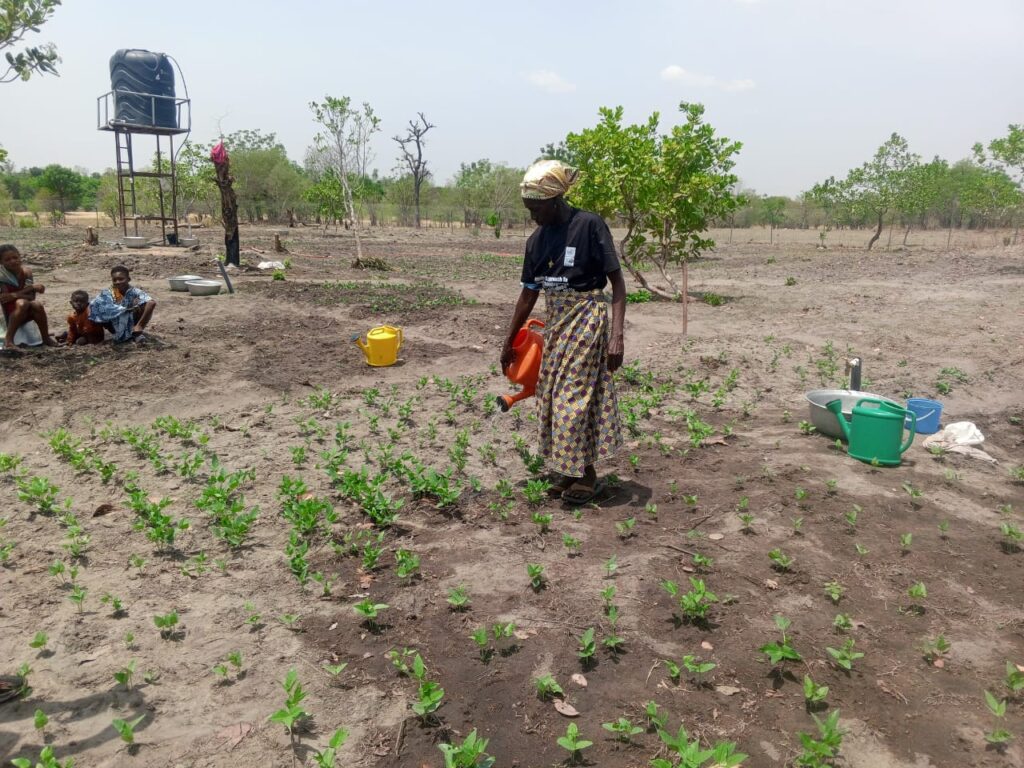
The facility, a two-acre fenced irrigable field with two overhead tanks, is expected to benefit over 40 households. Beneficiaries expressed gratitude, noting that the project would provide a reliable source of income. Madam Beatrice Sorsile for fresh vegetables.
Salifu Issifu Kanton, Executive Director of CDA, explained that climate change impacts in Saru, compounded by cross-border insecurity from neighboring Ivory Coast and Burkina Faso, had increased the community’s vulnerability. He emphasized that engaging women and youth in productive activities would reduce the risk of illicit activity and radicalization while promoting resilience against environmental shocks.
William Adongo, UNDP Preventing Violent Extremism Project Officer, said improving livelihoods for women and youth is key to sustainable peace and social cohesion. He highlighted that socio-economic deprivation, unemployment, and poverty are major drivers of violent extremism, especially in border communities, and expressed confidence that the irrigation project would mitigate these risks by strengthening economic opportunities and reducing vulnerabilities.
The initiative is expected to enhance food security, build local capacity, and contribute to long-term stability, while serving as a model for addressing conflict and vulnerability in other border communities.