
Dr Eric Asuman, the Director General of the Ghana Meteorological Agency (GMet) says the launch of the Ghana Climate Atlas has empowered the nation to predict accurate weather patterns over the next 50 to 100 years.
He explained that the Ghana Climate Atlas was a national climate information platform designed to support planning, risk assessment, and evidence-based decision-making and to strengthen climate resilient development.
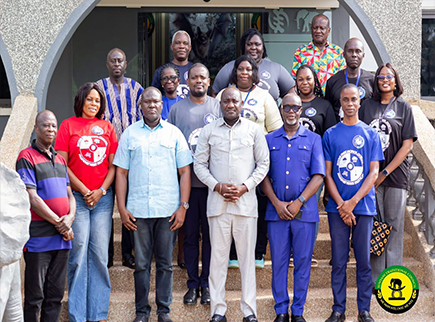
Dr Asuman said this when he paid courtesy to the Odeefour Ogyeamansan Boahen Korkor II, the Paramount Chief of the Sunyani Traditional Area at the Nana Bosoma Royal Palace in Sunyani.
He explained that the Atlas was designed as an interactive national climate service tool, saying that the platform consolidated historical climate observations and future projections, nationwide.
It is intended to improve access to reliable climate information and support its practical use in decision-making at both national and local levels, saying that tool enabled planners, engineers, and farmers to make informed long-term decisions.
Dr Asuman highlighted the core mandate of the GMet, assuring that the agency would continue to provide seasonal forecasts to support the agricultural and aviation industries, as well as the general public.
The GMet in collaboration with the Danish Meteorological Institute and with support from the Danish Embassy in Ghana launched the Atlas on Wednesday, March 25, 2026.
On his part Odeefour Ogyeamansan II commended the GMet for its dedication in predicting accurate weather conditions in the country and encouraging the agency to continue disseminating daily weather reports through radio and television stations.
He also asked the Agency to also take advantage of the proliferation information centers in rural communities and used them in the weather forecasting to serve the rural dwellers who were mostly farmers.e
The Paramount Chief noted that the rural communities and the farmers rely heavily on those information centers as their primary source of information.
Odeefour Ogyeamansan Korkor II highlighted the importance of the GMet, saying that the agency’s mandate had become more relevant due to noticeable changes in the traditional seasonal weather patterns.
He asked the agency to consider presenting weather forecasts in various local languages to ensure wider accessibility and understanding, especially in rural farming communities, and recommended the active use of new media for information sharing.
Dr Asuman was accompanied by Dr Vivian Abla Kali, the Deputy Director-General, Support Services, Dr Ignatius Kwaku William, the Deputy Director-General, Operations and other key personnel of the agency.