
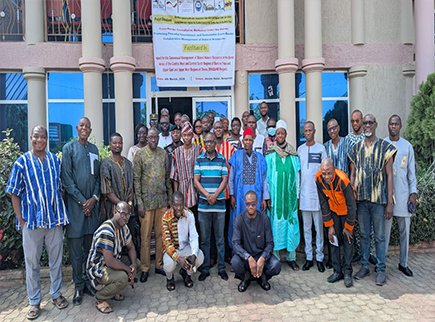
Stakeholders from Ghana and Burkina Faso have called for strengthened cross-border collaboration to effectively manage transhumance activities and natural resources to advance the livestock value chain for mutual economic and social benefits and build social cohesion.
The stakeholders, made up of government officials, heads of departments, security agencies, farmers, herders, community members, and non-governmental organisations from both countries, made the call at a cross-border dialogue held in Bolgatanga under the theme, “Promoting peaceful coexistence and sustainable cross-border collaborative management of natural resources.”
The dialogue was held under the Project for the Consensual Management of Shared Natural Resources in the Border Areas of the Central West and Central South Regions of Burkina Faso and the Upper East and Upper West Regions of Ghana (DINADANE project).
It is being implemented by Changing Lives in Innovative Partnerships (CLIP) in Ghana and Réseau Communication sur le Pastoralisme (RCOPA) in Burkina Faso, with support from the PATRIP Foundation and Help, and aims at reducing farmer-herder conflict and promoting coexistence within border communities.
In Ghana, the three-year project, which began in 2023, benefited six districts, namely Bongo, Kassena-Nankana Municipal and Kassena-Nankana West in the Upper East Region, and Sissala East Municipal, Sissala West and Lambussie in the Upper West Region.
According to the stakeholders, a well-managed transhumance system would not only minimise farmer-herder conflicts but also formalise livestock marketing, strengthen veterinary services and create opportunities for actors along the livestock value chain, including traders, transporters, and processors.
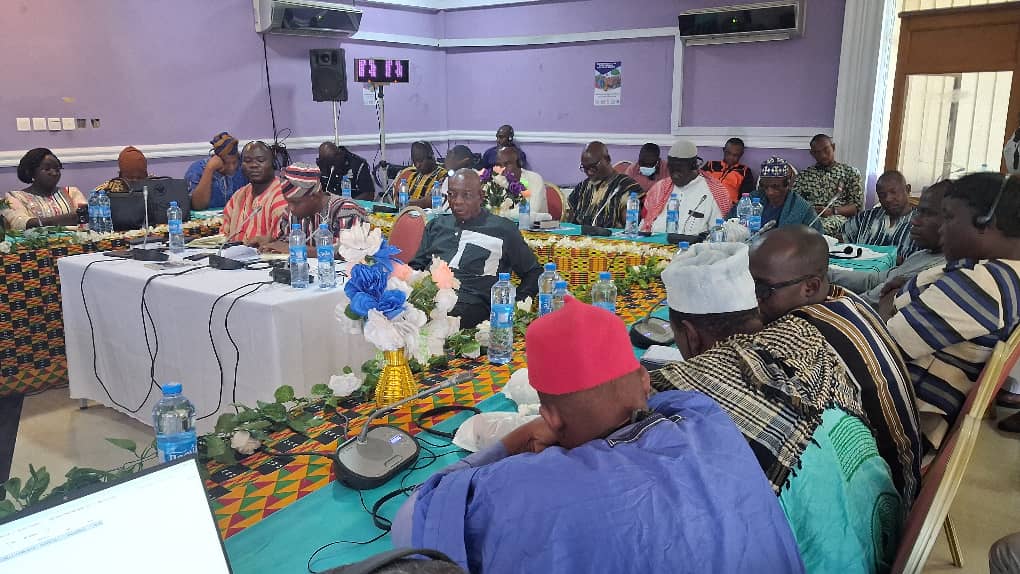
Mr Iddi Musah, Assistant Director at the Upper East Regional Coordinating Council in Ghana and Schedule Officer for the project, said transhumance remained inevitable and required structured management rather than resistance.
“Whether we like it or not, transhumance will continue to exist,” he said, explaining that climate variability and the search for pasture and water would continue to drive cross-border livestock mobility.
He noted that the DINADANE project had facilitated the establishment of livestock corridors, water points and veterinary facilities to regulate movements, reduce tensions and improve animal health, which are used by both transhumant herders and local communities.
He added that the creation and strengthening of cattle markets in participating districts had enhanced livestock trade, generated income for individuals and increased Internally Generated Funds (IGF) for district assemblies through market tolls and related levies.
Mr Musah, however, called for the enactment of clear legal frameworks to regulate transhumance activities in Ghana and for the sustainability of the gains by integrating the project’s systems and lessons into existing institutional structures.
“When issues arise, we often rely on dialogue. But where matters are criminal in nature, dialogue alone is not sufficient. We need specific laws that we can refer to in addressing such issues,” he said.
Mr Kam Aristide Mohamed, Chief Executive of Nahouri Province in Burkina Faso, also called for deeper cooperation between the two countries to harness the economic potential of transhumance and strengthen livestock trade across borders.
Mr Alhassan Mohammed Sayibu, Technical Advisor on Agropastoralism at CLIP, said the project implemented community- and district-level dialogue platforms and informed debates to enhance understanding of transhumance and shift perceptions from conflict to opportunity.
“In the past, herders rarely participated in community meetings. Today, they freely engage in discussions and even take part in local decision-making. In some communities, chiefs of herders have been identified to serve as a link between herders and host communities,” he said.
Mr Mohammed noted that climate change had altered traditional migration patterns, making it necessary for both countries to adopt coordinated measures to manage livestock mobility.
“As a country, we must put measures in place to manage livestock mobility so that we can benefit economically. Livestock markets thrive where herders are present, and assemblies can increase revenue through market taxes and other levies, strengthening the entire livestock value chain,” he added.
Ms Sonda Beore, Officer in charge of Social Cohesion at RCOPA in Burkina Faso, said the project had successfully implemented cross-border consultation frameworks, negotiated spaces for pastoral infrastructure, and developed early warning mechanisms to prevent conflicts.