
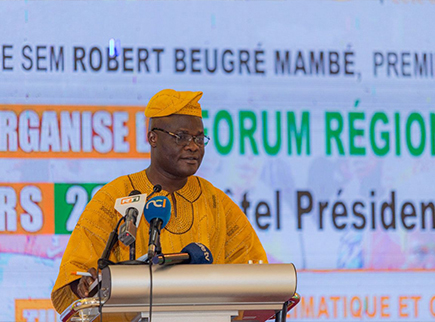
Mr Ahmed Ibrahim, the Minister for Local Government, Chieftaincy and Religious Affairs (MLGCRA), has called on West African countries to take urgent and coordinated action, to address rising conflict and climate-related risks across the subregion.
He said conflicts in West Africa were becoming increasingly complex, spreading across borders and driven by climate stress, economic hardship, and social fragility.
“We are no longer dealing with isolated crises. These challenges move, they spread, and they demand a collective response,” he added.
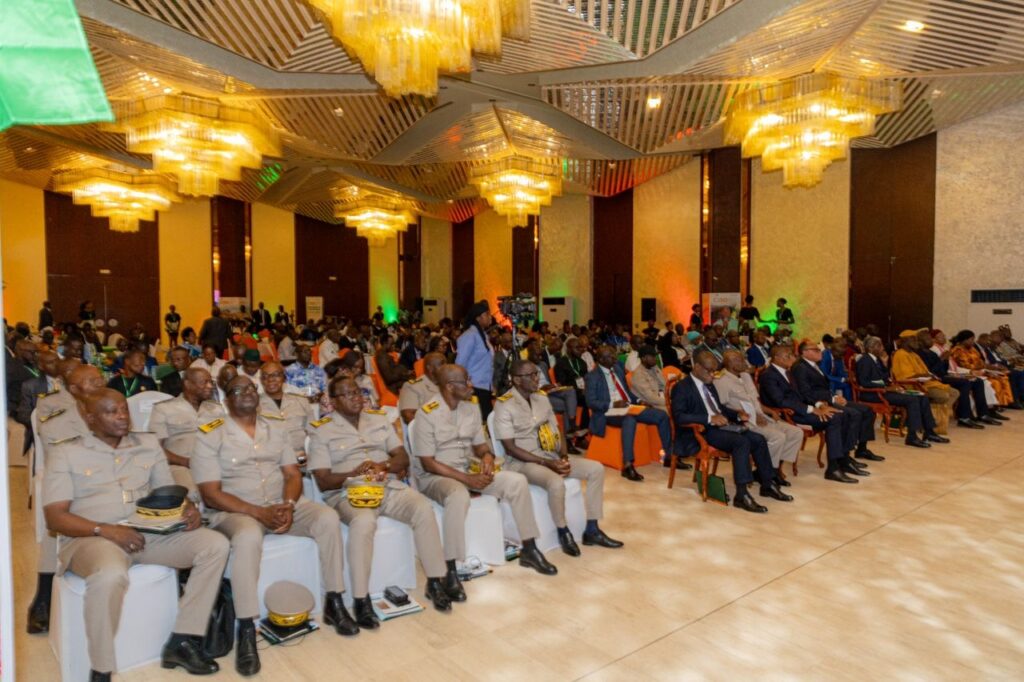
The Minister made the call in his address which was made available to the Ghana News Agency at the opening of the Social Cohesion (SOCO) Conference in Yamoussoukro, La Côte d’Ivoire, where regional leaders gathered to deliberate on strategies to safeguard vulnerable border communities.
The conference brought together government officials, development partners and regional stakeholders to review progress under the SOCO Project, which focuses on strengthening stability in border regions of countries including Ghana, Benin, Côte d’Ivoire and Togo.
A key issue highlighted during discussions was the growing impact of climate change on social cohesion, where delegates pointed to erratic rainfall, land degradation and diminishing natural resources, particularly in the Sahel and northern zones, as factors intensifying competition and fueling local tensions.
Mr Ibrahim said these pressures were not abstract but were already influencing how communities interact, how resources were shared and, in some cases, how conflicts emerge.
He warned that without targeted interventions, climate-induced stress could worsen existing vulnerabilities, especially in underserved border communities where access to services and economic opportunities remains limited.
The Minister observed that such communities continued to bear the brunt of these overlapping challenges, citing high youth unemployment, weak local economies and limited infrastructure as key risk factors for instability.
He acknowledged progress made under the SOCO Project, including investments in infrastructure, local enterprise development and initiatives aimed at strengthening community trust.
“These are real gains but they are not enough,” he added.
He also raised concern over gaps in early warning systems for conflict prevention, noting that although communities often detect warning signs early, information flow to decision-makers was frequently delayed.
Mr Ibrahim identified the SOCO Knowledge Management Platform as a vital tool for improving cross-border coordination, while stressing the need for its effective implementation and accessibility.
He urged participating countries and partners to strengthen information-sharing systems, invest more in local economic opportunities, particularly for youth and women, and sustain long-term efforts in conflict prevention.
He emphasised that economic empowerment through agriculture, small businesses and local enterprise development remained central to building resilience and reducing vulnerability to conflict.
As deliberations continued, the conference reinforced the view that climate change was not only an environmental concern but also a critical factor influencing peace and security in West Africa.
The message from Yamoussoukro was clear: without stronger coordination, increased investment in communities and a unified regional approach, the combined pressures of climate change and fragility could outpace efforts to maintain stability.
Caption: Pictures Attached