
Northlite Solar Limited has intensified calls for the adoption of green energy solutions in northern Ghana, urging businesses, institutions and households to transition to solar power to address persistent electricity challenges and climate-related energy risks.
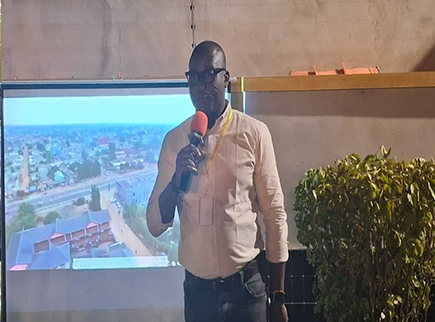
Speaking at a stakeholders’ cocktail engagement at Kombosigo in the Bolgatanga East District, Mr Frank Akasoba Adabre, the Chief Executive Officer of Northlite Solar Limited, emphasised the urgent need to embrace renewable energy as a sustainable alternative to fossil fuels and unreliable hydro-grid supply.
He noted that global geopolitical tensions continued to disrupt coal, oil and gas supply chains, while changing weather patterns and declining water levels in hydroelectric dams threaten electricity generation in Sub-Saharan Africa.
“With the changing climate and the instability in global fossil fuel supply, renewable energy, especially solar, is no longer an option but a necessity,” Mr Adabre stated.
He explained that solar energy offered long-term cost savings, environmental protection and energy independence for homes, factories, hospitals and commercial enterprises.
Mr Adabre highlighted that Northlite’s Bolgatanga office operates as a fully solar-powered “green space,” with all seven air conditioners and water systems powered by solar energy.
The company also maintains offices in Accra and Silver Spring, Maryland, in the United States.
Providing an overview of the company’s operations, he disclosed that in 2025, Northlite executed projects worth approximately 3.2 million US dollars, backed by impact investments, and was targeting 8.5 million US dollars in investments in 2026, with an installed capacity goal of 3.5 megawatts in commercial and industrial (CNI) projects.
He revealed that the company had developed what it described as Ghana’s largest microgrid solar system (413 kilowatts) in Akayet Hotel in Bolgatanga, with an investment of about 1.3 million US dollars, attracting interest from financial institutions such as Eco Bank and Stanbic Bank for potential scale-up financing.
He stressed that large-scale adoption of solar power would reduce pressure on the national grid, cut down operational costs for businesses, and contribute significantly to Ghana’s climate change mitigation efforts.
Beyond commercial projects, he highlighted the social impact of renewable energy, particularly in healthcare and rural communities.
He recounted how the company installed a solar system in a rural CHPS compound in the Upper West Region after witnessing the difficulty health workers faced in treating patients without electricity.
“Reliable power in health facilities is critical for saving lives. Solar energy ensures constant lighting and refrigeration for vaccines,” he said.
The company is also promoting solar-powered water pumping systems for rural farmers and off-grid electrification for underserved communities, especially in northern Ghana.
Mr Adabre encouraged financial institutions and development partners to support green investments to accelerate Ghana’s transition to clean energy.
Participants at the event welcomed the advocacy, describing renewable energy adoption as a strategic step toward sustainable development, economic resilience and environmental protection.
Professor David Millar, the President of the Millar Open University, who had installed solar system from the Northlite Solar Limited in his University and house called on tertiary institutions to shift towards the use of solar to ensure stable power supply to reduce cost of electricity.