
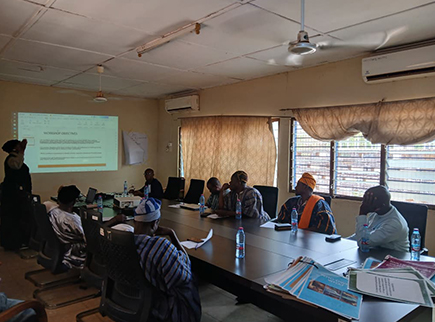
Members of the Northern Regional House of Chiefs and their representatives have received a day’s training, aimed at strengthening child and adolescent protection systems in the region.
The training sought to equip traditional leaders with knowledge and practical approaches to child protection including the use of new tools on mental health and psychosocial support (MHPSS), men and boys’ engagement, prevention of sexual exploitation and abuse (PSEA), positive parenting and adolescent, and menstrual hygiene.
It was to enable chiefs and their representatives to prevent, identify and report child protection violations while encouraging parents and community members to play active roles in safeguarding children.
It was organized by the Department of Community Development in collaboration with the Departments of Children and Social Welfare and with support from the United Nations Children’s Fund.
The training formed part of ongoing efforts to improve community-based child protection mechanisms and enhance coordination between traditional authorities and state institutions responsible for child welfare.
Madam Rashidatu Mohammed, Northern Regional Director, Department of Community Development, speaking during the training in Tamale, said it brought together six chiefs and their representatives to educate them on child protection issues and the referral pathways available for addressing such cases.
She said child marriage, teenage pregnancy, sexual and gender-based violence, harmful cultural practices and limited access to education continued to affect children and adolescents in the region.
Madam Mohammed described the situation as worrying, citing statistics that indicated high cases of child protection violations in the region and called for urgent and collective action to address the situation.
She emphasized the role of traditional leaders as gatekeepers in their communities and urged them to actively support efforts to prevent and report abuse.
She also encouraged parents to adopt positive parenting practices by maintaining close relationships with their children to foster open communication and early identification of challenges.
She was optimistic that the training would lead to significant improvements in the handling of child protection issues and contribute to reducing violations in the region in the coming years.
Madam Annunciata Mary Anglaaere, Northern Regional Director, Department of Social Welfare, outlined the Department’s referral pathways for handling reported cases.
She explained that cases received were first assessed to determine whether they fell within the Department’s mandate, with serious criminal matters such as narcotics, robbery, and traffic offences referred directly to the Police.
She added that cases involving sexual offences, especially defilement, were automatically escalated to law enforcement agencies.
She assured members of the public that the system was designed to protect vulnerable persons, while ensuring that legal obligations were met, encouraging individuals to report sensitive issues with confidence.
Mohammed Rasheed Abdulai, Secretary to the Gulkpe Naa, Chief of Tamale, in an interview, underscored the responsibility of traditional authorities in ensuring the welfare and protection of children within their jurisdictions.
He said childcare was a shared responsibility involving parents, schools and the wider community, adding that chiefs depended on information from community members to respond appropriately to child protection concerns.
He said while minor disputes could be resolved at the palace level, criminal matters were referred to the appropriate law enforcement agencies for action and urged parents to take keen interest in their children’s lives by observing behavioural changes and monitoring their academic progress.
Participants are expected to apply the knowledge gained by promoting positive parenting, preventing child protection violations, and referring cases to the appropriate authorities to ensure the safety and well-being of children in their communities.