
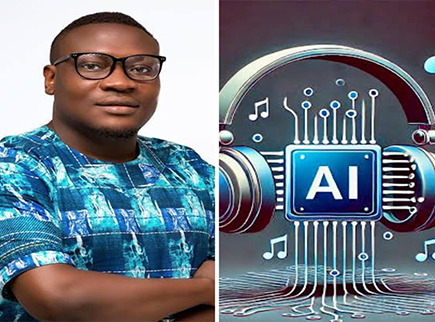
Mr. Jonathan Nii Laryea, widely known in the showbiz space as Jonilar, has called on musicians to be more strategic and intentional with their craft in the fast-evolving era of Artificial Intelligence (AI)-generated music.
He made the call during an exclusive interaction with the Ghana News Agency (GNA) on Wednesday morning, where he shared insights on how emerging technologies are reshaping music creation, distribution, and ownership.
The celebrated talent manager and digital music expert cautioned artists against being passive observers in the AI revolution, urging them instead to understand the ecosystem and position themselves to benefit from it, stating that, AI-generated music is rapidly gaining traction on digital platforms and social media, the rights and creative contributions of original musicians must be protected.
Mr Laryea appealed to music streaming platforms and digital service providers (DSPs) to respect artistic intellectual property by ensuring that musicians whose works are used to generate AI content are compensated.
“When fans or individuals use AI tools to recreate or rework a song originally produced by a musician and immediately upload it onto streaming platforms, there must be a clear requirement for a percentage split,” he stated.
He added that the larger share of revenue from such AI-assisted productions should go to the original creators or rights holders, emphasising that technology must not override established creative and legal frameworks.
“The lion’s share must go to the original artist or whoever owns the masters. AI-generated songs are gaining massive attention and streams, but we cannot disregard the legal structures that govern creativity, ownership, and royalties,” Jonilar advised.
Touching on artistic growth and sustainability, Mr. Laryea encouraged musicians to invest heavily in their talent, branding, and sound identity, noting that uniqueness remains a powerful currency in the digital age.
According to him, artists who deliberately refine their sound, storytelling, and audience engagement will continue to stand out even in an environment where AI recreations and digital piracy are on the rise.
“To my colleagues in the Volta Region, when your music carries a distinct signature, your core fans will always recognize your niche and creative direction, regardless of imitation or technological replication,”
His remarks come at a time when conversations around AI ethics, music rights, and digital monetisation are intensifying globally, placing African and Ghanaian musicians at a critical crossroads in the evolving digital entertainment economy.
GNA investigations revealed that many songs and soundtracks trending on social media, featured in movies, or played at events are AI-generated. but originally created and owned by musicians.
Industry observers describe this as a form of exploitation, as artists pour their talent and resources into crafting these tracks, yet streaming platforms and content hubs often fail to acknowledge or fairly compensate for the original creators.
In the era of AI-driven music, protecting artist rights has become more urgent to musicians, producers, and other industry players.