
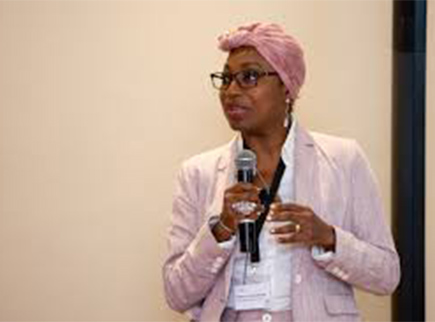
Professor Fatima Denton, Principal Investigator and Director of the United Nations University Institute for Natural Resources in Africa, says Ghana is entering a decisive development phase requiring economic transformation, food security and climate action to advance together, rather than in isolation.
In her opening remarks at a workshop marking the end of the two-year Innovative for Clean Agricultural Technologies (INFoCAT) project, she said the initiative was timely and aligned with Ghana’s ambition to build a green, resilient and inclusive economy.
The project is being implemented in Ghana, Senegal and Côte d’Ivoire.
Prof. Denton noted that INFoCAT supported sustainable economic growth, renewable energy development, green job creation for women and youth, and climate-resilient agriculture.
The workshop brought together sponsors, stakeholders, policymakers and beneficiaries to showcase the achievements, findings, lessons, impacts and scaling opportunities of the pilot project.
Professor Denton said the INFoCAT initiative demonstrated practical pathways for strengthening food security while advancing low-carbon development.
She added that the United Nations University Institute for Natural Resources in Africa (UNU-INRA) remained committed to supporting African countries through policy-relevant research, innovation and capacity development at the intersection of natural resources, clean energy and inclusive growth.
Touching on clean agritech and Ghana’s Green Transition Agenda, Prof Denton said evidence from INFoCAT showed that clean energy-powered technologies could significantly reduce post-harvest losses, improve food availability and quality, increase farmer incomes and contribute directly to Ghana’s low-carbon economy goals.
She highlighted the role of the initiative in promoting green jobs and economic empowerment for women and youth, noting that INFoCAT supported women- and youth-led micro, small and medium enterprises (MSMEs), fostered green entrepreneurship in agritech and clean energy, and built skills linked to real market opportunities.
On policy alignment, Professor Denton said INFoCAT was strongly aligned with Ghana’s key national strategies, including the Energy Transition and Investment Plan, by advancing off-grid and decentralised renewable energy solutions for agriculture.
She said the initiative also reinforced the Presidential Initiative in Agriculture and Agribusiness by enabling private sector-led, climate-smart agribusiness development.
Prof Denton called for sustained collaboration among stakeholders to ensure that Ghana’s green transition delivered food security, created decent green jobs for women and youth, and built a resilient, low-carbon agricultural economy.
She expressed appreciation to the funder, the International Development Research Centre (IDRC), and partner ENDA Energie for their support in driving the initiative forward.
At the event, winners from Ghana, Senegal and Côte d’Ivoire received a total of US$37,000 in support.
In Ghana, Wobil Technologies Limited emerged first, while Villian Star Limited placed second.
In Senegal, Moussa Ndoye Company took first place, followed by Ady M. Nissan Company in second position.
Lynays Company emerged first in Côte d’Ivoire, while AD Solar placed second.
Dr Ferdinando Tornyie, a Research Fellow at UNU-INRA and Project Coordinator for the three countries, highlighted key challenges facing the agricultural sector.
He cited low mechanisation levels, with most land cultivation being manual, labour-intensive and characterised by drudgery.
Dr Tornyie noted that women occupied several levels of the agricultural value chain but often worked under strenuous conditions with long working hours.
He stressed the urgent need for innovative clean energy-powered agritech solutions to modernise the sector and expand energy access, adding that energy use in agriculture in Ghana was still dominated by fossil fuels and biomass.
In all, 20 innovators from Ghana, and five each from Senegal and Côte d’Ivoire were shortlisted for the INFoCAT challenge, each receiving a US$7,400 grant, with renewable energy as a key component.