
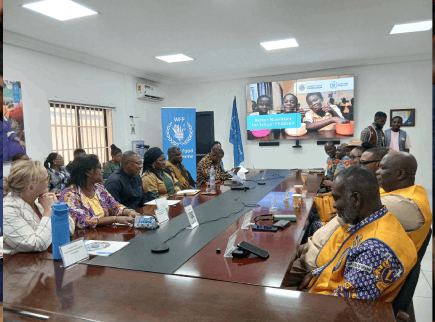
Some 33,598 schoolchildren from two districts in the Northern and Ashanti regions are set to benefit from a pilot Home-Grown School Feeding (HGSF) Programme launched by the United Nations World Food Programme (WFP) and the Lions Club International Foundation in Accra on Friday.
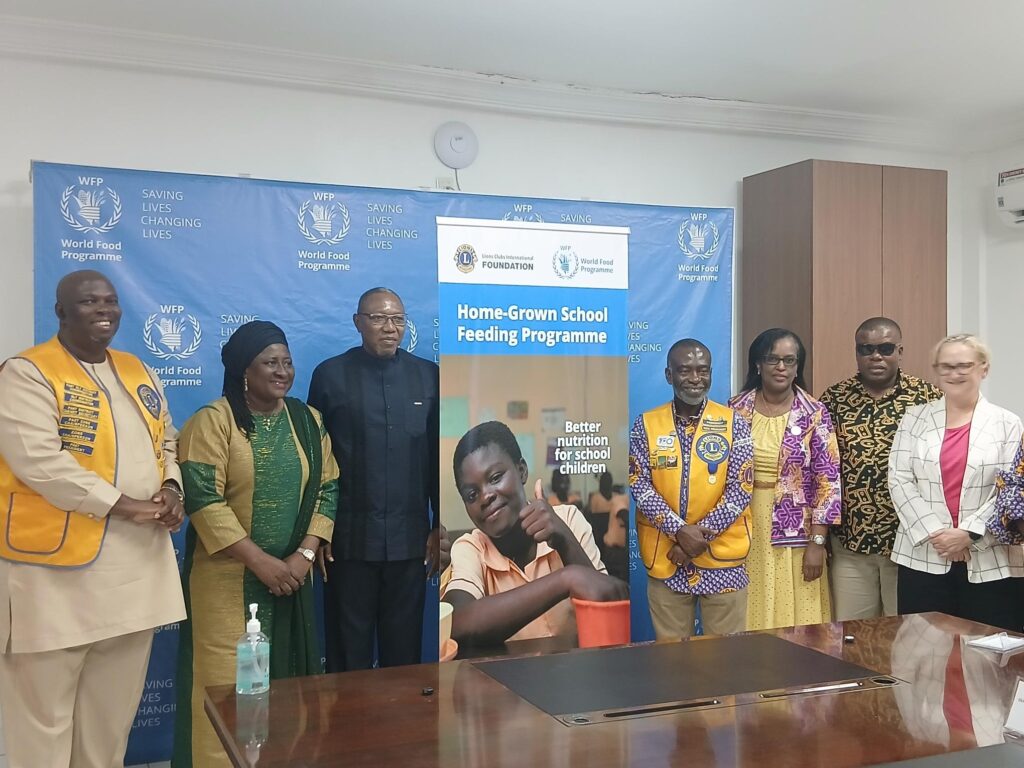
The initiative, which will be implemented in the Karaga District of the Northern Region and Sekyere Central District of the Ashanti Region, will provide safe, nutritious and locally produced meals for children in approximately 100 selected schools for one year, while creating structured market opportunities for smallholder farmers and local food suppliers.
Seeking to complement government’s School Feeding in the two districts, the programme aimed to improve child nutrition, enhance learning outcomes and strengthen local food systems.
It also forms part of efforts to support the country’s development agenda and the attainment of Sustainable Development Goal Two (SDG 2), which seeks to end hunger, achieve food security and improve nutrition.
The Home-Grown School Feeding, funded jointly by Lions Club International Foundation (LCIF) and World Food Program USA, is part of a new three-year US$12 million global commitment to supporting HGSF programmes with each organisation contributing US$2 million annually.
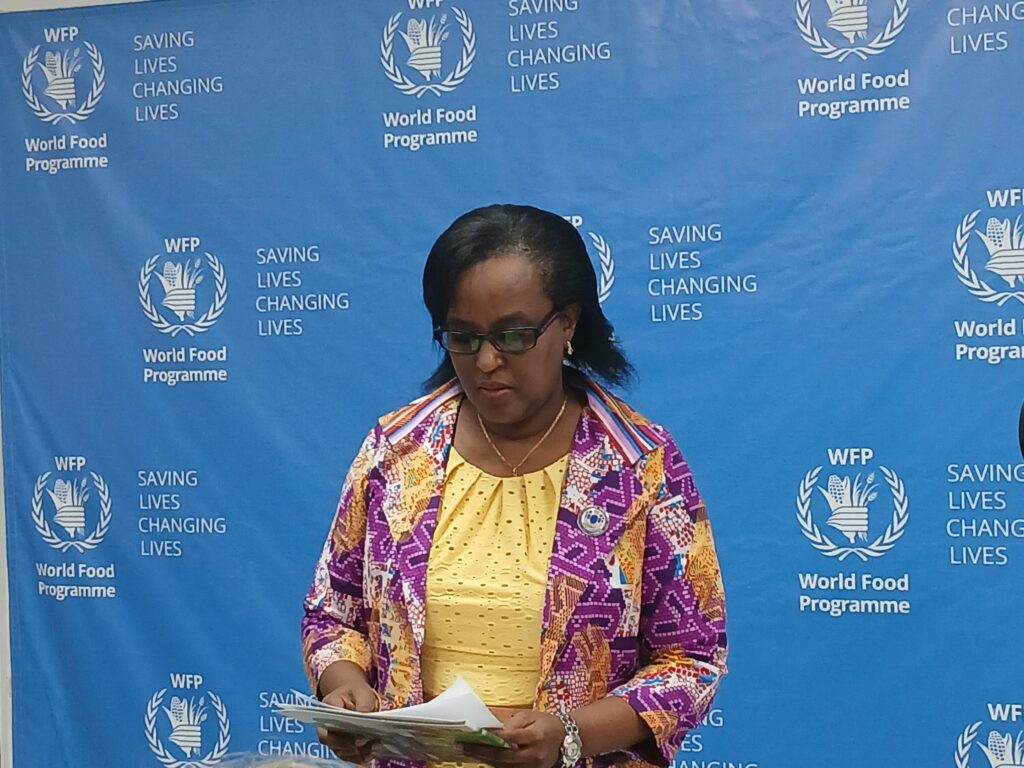
At the launch in Accra on Friday, Madam Aurore Rusiga, the Country Director of WFP Ghana, said the programme was designed to connect school feeding with local agricultural production to ensure that children received nutritious meals while farmers benefited from reliable markets.
The project addressed two critical priorities simultaneously by strengthening the home-grown school feeding approach and promoting domestic food production.
“It strengthens the Home-Grown School Feeding approach by increasing the participation of local farmers, creating reliable and predictable market opportunities and improving livelihoods,” she said.
Madam Rusiga noted that every meal served under the programme would go beyond feeding children by supporting farmers, stimulating local economies, and strengthening communities.
She described the programme as more than a social intervention, saying it was an important policy tool for promoting human capital development, socio-economic progress and sustainable food systems.
The WFP Country Director said the project would be implemented in collaboration with the ministries of Gender, Children and Social Protection, Education, and Food and Agriculture, as well as the Ghana School Feeding Programme Secretariat, to ensure strong national ownership and coordination.
She expressed appreciation to LCIF for supporting the initiative and helping to build a system that benefits children while creating economic opportunities for communities.
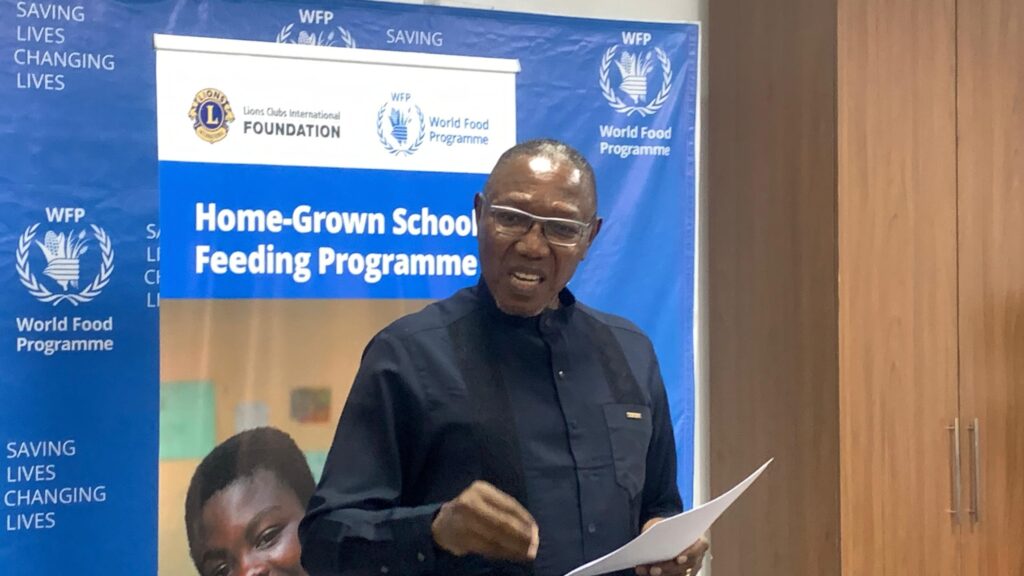
Mr Prince Obeng Dwamena, the District Governor of Lions Club District 418, said the programme reflected the organisation’s commitment to addressing hunger and improving food security among vulnerable populations.
He said hunger remained one of the greatest barriers to education, health and human development, noting that a hungry child could not effectively concentrate in class nor realise his or her full potential.
The programme, he said, adopted a holistic development model that created direct linkages between schools and local farmers, thereby providing nutritious meals to children while generating stable markets for agricultural produce.
Mr Dwamena said the intervention would help strengthen local economies, create jobs, and build resilient food systems in beneficiary communities.
“As Lions, we believe that service is most impactful when it is sustainable. That is why we are proud to work alongside the World Food Programme and government institutions to support a model that promotes long-term food security rather than temporary relief,” he said.
Hajia Fati Forgor, the National Coordinator of the Ghana School Feeding Programme (GSFP), welcomed the initiative, describing it as a significant complement to government efforts to improve school feeding across the country.
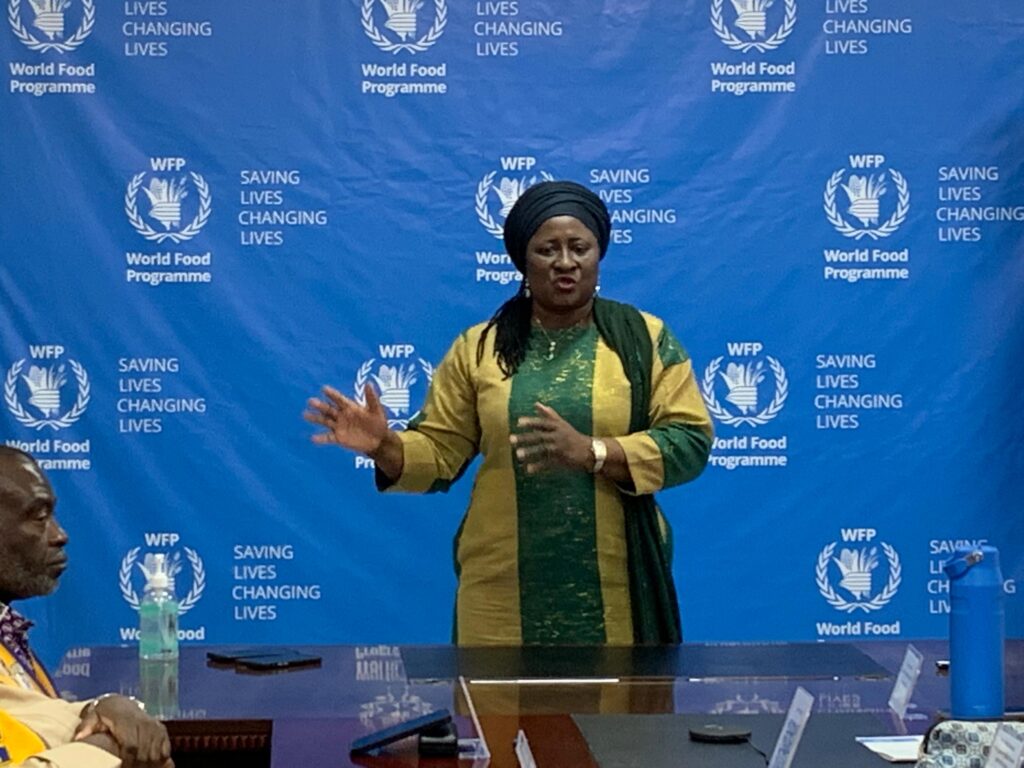
The GSFP, which began in 2005 with only 10 schools and 1,900 pupils, had expanded significantly and currently benefiting about 4.27 million children in 12,045 kindergarten and primary schools nationwide, she said.
Hajia Forgor noted that while the Government currently financed the programme, development partners such as WFP had provided critical support to improve service delivery, including strengthening monitoring and evaluation systems through digital data collection.
She said the home-grown school feeding programme would, therefore, provide an opportunity to test stronger linkages between school feeding caterers and local farmers, adding that lessons from the pilot would help inform future scale-up efforts and contribute to improving the nutritional quality of meals served under the national programme.
Dr Clement Apaak, the Deputy Minister of Education, described the initiative as an important partnership that underscored the close relationship between education, nutrition and national development.
He said the ability of children to learn effectively was closely linked to their health and nutritional well-being, stressing that interventions that improved school nutrition were critical investments in education and human capital development.
Dr Apaak noted that the project demonstrated the strong connection between education, agriculture, nutrition and community development by providing nutritious meals sourced from local farmers, while creating economic opportunities for farming communities and strengthening local food systems.
He commended the WFP and LCIF for supporting Ghana’s efforts to ensure that every child had access to quality education in an environment that promoted health, dignity and equal opportunity.
Mr Bright Demordzi, the National Coordinator of the Feed Ghana Programme at the Ministry of Food and Agriculture, said the HGSF concept represented a strategic development approach that not only provided nutritious meals to schoolchildren but also created reliable markets for local farmers.
It also stimulated rural economies, strengthened agricultural value chains and contributed to poverty reduction through stronger linkages between schools and food producers.
Mr Demordzi noted that it aligned with the Government’s agricultural transformation agenda and the Feed Ghana Programme, which sought to increase food production, improve market access, promote value addition and enhance national food security.
He reaffirmed the Ministry’s commitment to working with partners to empower farmers to meet the growing demand for safe, nutritious and locally produced food.