
Mrs Prisca Na’ambome Yeuzie, Queen Mother of the Nagodie Traditional Area in the Upper East Region has called for efforts to preserve and document Ghana’s documentary heritage.
She said this would safeguard the country’s history, cultural identity and indigenous knowledge for future generations.
She said documentary heritage provided important evidence of the historical transformations, cultural diversity and knowledge systems that had shaped Ghanaian society and should therefore be treated as an important national asset.
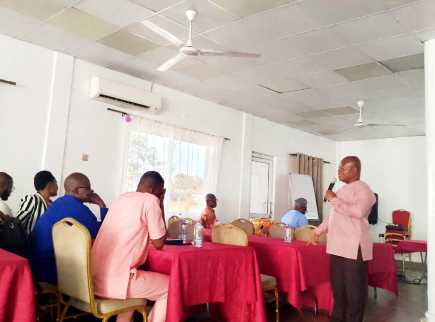
Mrs Yeuzie made the call while making a presentation on the relevance of documentary heritage to Ghana and the world as part of a two-day workshop organised in Tamale by the UNESCO Accra Office.
The workshop formed part of UNESCO Memory of the World (MoW) Programme, implemented under the “Advancing Preservation of African Documentary Heritage at Risk” project with funding support from the Japan Fund – in Trust.
It brought together media practitioners across northern Ghana to build their capacity to understand, value and effectively report on documentary heritage particularly in ways that would reach young people and the wider public.
The workshop formed part of broader efforts to ensure that African’s documentary heritage particularly materials at risk of deterioration, loss or neglect is identified, preserved, digitized where appropriate and made accessible to future generations.
Mrs Yeuzie said the preservation of documentary heritage was important because it helped to maintain national memory and provided evidence of significant historical developments for research, education, heritage management and the transmission of knowledge from one generation to another.
She explained that documentary heritage went beyond old manuscripts and archival materials, noting that it included different forms of records that captured the experiences, knowledge, identities, and contributions of communities over time.
She said Ghana’s cultural diversity and different knowledge systems were embedded in its documentary heritage and needed to be preserved to ensure that future generations understood the historical foundations of their communities and the country.
She emphasized that northern Ghana had historically been part of wider networks of trade, migration, scholarship and cultural exchange.
She said trade routes had connected communities in northern Ghana to important centres across West Africa facilitating the movement of goods, people, knowledge and ideas.
She said documenting northern Ghana’s heritage should not be viewed simply as an exercise to preserve old records but as a means of safeguarding evidence, memory, knowledge and identity while connecting community histories to Ghana, West Africa and the wider world.
Mr Yakub Abdul-Hamid of the UNESCO Accra Office said there were compelling angles for media practitioners to explore in reporting on archives, records and memory institutions.
He said the media had an important role in shaping public understanding of documentary heritage and placing heritage preservation issues on the public and policy agenda.
He said documentary heritage including manuscripts, archival records, audio-visual materials, photographs, oral traditions and digital records remained an underreported and often misunderstood subject in African newsrooms.
He said the media’s ability to inform the public, influence discussions and shape policy priorities made journalists important partners in efforts to protect documentary heritage.
Mr Abdul-Hamid said the initiative would also establish a network of trained media focal points, who could champion sustained reporting and public awareness on documentary heritage beyond the workshop.