
The Ghana Health Service (GHS) in the Bawku West District, has recorded significant improvements in maternal and child health services.
The District maintained outstanding performance in key maternal health indicators as postnatal care within 48 hours achieved 99.97 per cent coverage, which exceeded the national target.
Human Immune Virus (HIV) testing among pregnant women under the Prevention of Mother-to-Child Transmission (PMTCT) programme reached 99.9 per cent, while syphilis screening remained high at 99.81 per cent.
One of the most remarkable achievements was the improvement in skilled delivery coverage, which increased from 82.14 per cent in the first half of 2025 to 98.16 per cent in 2026.
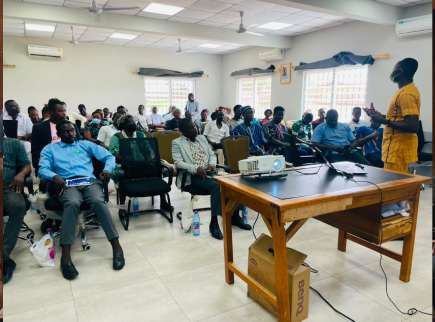
Mr Stephen Bordotsiah, the District Director of the GHS, disclosed this at the 2026 half-year performance review meeting of the Service in the district.
The meeting brought together healthcare professionals, heads of institutions and stakeholders within and outside the district to take stock of their activities within the period and strategise for improved service delivery.
Mr Bordotsiah attributed the district’s improvement to increased utilisation of skilled birth attendants and healthcare professionals collective commitment to improving maternal healthcare.
He further disclosed that the district recorded progress in malaria prevention during pregnancy, with increased coverage of the Intermittent Preventive Treatment of malaria in pregnancy, third dose (IPTp3) from 64.56 percent to 69.90 percent.
He added that anaemia among pregnant women at 36 weeks declined from 38.89 per cent to 34.34 per cent, a development, attributed to improved maternal nutrition and strengthened antenatal care interventions.
Despite these successes, Mr Bordotsiah expressed concern over several indicators that fell below the district’s targets.
“Our stillbirth rate has increased to 13.59 per 1,000 births, exceeding our target of fewer than 11 per 1,000 births. This calls for renewed commitment to quality antenatal, intra-partum and emergency obstetric care,” he noted.
He said Family Planning acceptor rate also declined to 35.07 per cent, below the district target of 40 per cent.
“This trend requires intensified community engagement, improved counselling services and stronger male involvement in family planning programmes,” he said.
Mr Bordotsiah noted that immunisation coverage was another area of concern, as Measles-Rubella second dose (MR2) coverage declined sharply to 74.14 per cent, significantly below the 95 per cent target, while Vitamin A supplementation reached only 54.53 percent against the target of 80 percent.
“These gaps expose our children to preventable illnesses and must be addressed through strengthened outreach services, community mobilisation and improved defaulter tracing,” the Director said.
He further disclosed that Outpatient Department (OPD) attendance per capita remained low at 0.71, compared to the expected 1.2, which suggested that many residents were either delaying healthcare or seeking services outside the district.
Mr Bordotsiah said Tuberculosis (TB) interventions showed encouraging progress, with 49.16 percentage improvement in screening coverage, a close figure to the district target of 50 percent.
On sub-district performance, the Director congratulated the Tilli/Widnaba Sub-District, which emerged as the overall best-performing sub-district with a composite score of 88 points.
“I equally commend Boya/Gbantongo, Sapelliga/Googo, Zebilla South and Zongoire, which jointly secured second position with 82 points each,” the Director said.
He encouraged the lower-performing sub-districts to remain focused on improvement. “I encourage Tanga/Timonde and Zebilla North not to be discouraged but to use today’s review as an opportunity to identify gaps and learn from the best-performing teams,” he said.