
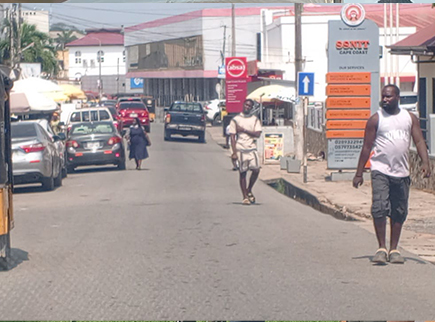
Some residents in the Central Regional capital of Cape Coast have expressed mixed feelings about President John Dramani Mahama’s one year in office, with many others lauding him for a good job done.
Largely, the residents highly praised the President’s administration for the swift economic reliefs and social programmes that had eased financial pressures through targeted tax reforms while fostering job creation and economic dialogue.
They mentioned key reforms including repealing the E-Levy, Betting Tax, Emissions Levy and COVID-19 Tax that had been replaced with employment drives like One Million Coders, Adwumawura and the ongoing National Apprenticeship initiative to equip youth with skills and jobs.
As the citadel of education in Ghana, many of the residents also lauded the free tertiary education for people with disabilities, sanitary pads distribution for girls and funding for the Women’s Development Bank, though they were sceptical about its commencement.
For Mr Emmanuel Essen, an entrepreneur, broader economic steps involving forming a lean cabinet, hosting a National Economic Dialogue and cracking down on illegal forest mining deserve commendation.
These actions, for him, had laid a strong foundation for sustainable growth towards achieving government’s resetting agenda to deliver infrastructure upgrades, jobs and economic turnaround.
Mr Samuel Ato Brown, a retired Civil Servant, said President Mahama’s administration had achieved a quantum of progress in stabilising the Ghanaian Cedi, countering previous rapid depreciations that had eased export and import costs.
“Inflation is easing rapidly, though prices of food items and utilities remain a challenge. Regardless, I’m highly convinced the overall economic conditions that feel steadier on paper will reflect in our pockets soon,” he noted.
Mr Augustine Amoah, an educationist and fisherman said, fishermen at Elmina Beach to the traders in Kotoka Market have seen the President as pulling back the curtains on governance like the morning sun over their Atlantic waves.
To him, President Mahama’s humility had demystified governance with no more shadows of secrecy as roads were rising with big push, discerning voices were heard loudly and power was flowing to every home and heart.
According to him, “President Mahama was turning the castle of old mysteries into a lighthouse of open governance for all Ghana,” rallying all to support.
Mr Kofi Mensah Abrampah, a 45-year-old trader at Abura Market, noted improvements in road networks, streets lighting and market facilities.
Particularly, he said that the 24-hour trading at the Abura market though yet to start officially, had brought more customers to shop at night, boosting his sales by nearly 20 percent.
He declared, “President Mahama’s triumphant return has ignited a spark of hope, like the light of dawn piercing a gloomy night after years of relentless economic storms.”
“He is sweeping away the shadows of hardships from COVID-19 and Russian-Ukraine war, ushering in an electrifying era of renewal and promise particularly for the youth.”
Similar sentiments were echoed among fisher folks near the Cape Coast Castle as Madam Abena Dadzie, a fish seller, commended the seamless distribution of premix fuel that had enhanced fishing activities.
She added that fuel shortages were down, there was more catch, and it was helping families like hers.
However, not all views were positive, as youth unemployment remained a sore point in Cape Coast with no factory according to Mr Emmanuel Kwame Andam, a 28-year-old engineering graduate.
He told the GNA that one year on, many of them were still jobless, “the economy felt better on paper but not in their pockets.”
Madam Akosua Darko, a pensioner in Pedu, pointed to rising food and utility prices, saying that inflation was easing, but her pension did not stretch as far, and they needed more action on affordable housing and healthcare.