
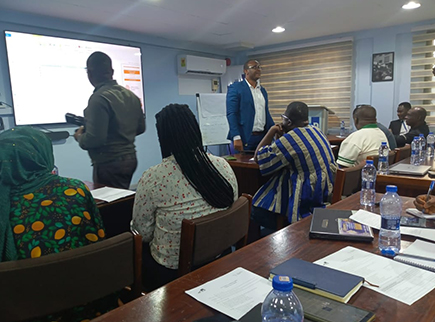
Dr Timothy Kwabla Zilevu, Senior Lecturer at the University of Professional Studies, Accra (UPSA), Wednesday stated that failures of pro-poor policies in the country were not accidental.
He explained that it was rather a result of the systemic exclusion of the input of the marginalized.
He said it was also due to odd decisions, accountability processes and wrongful data.
Dr Zilevu stated this when he delivered papers on the topic “Introduction to Pro-poor, Gender and Disability – Response Policy Analysis and Examining Social Accountability Tools and Ethical Data Collection and Evidence”, at a workshop organised by Ghana Centre for Democratic Development (CDD-Gnana).
The 45 participants to the workshop were drawn from the La Nkwantanang Madina, Kweabebirem, Ekumfi, Gomoa West, Kadjebi, Adaklu and Shama Districts.
Mr Zilevu alleged that there were a lot of biases in data collected for policy implementation in the country.
“Most policies failed because of the loopholes created by wrong data,” he said.
The Senior Lecturer contended that those who collected data on behalf of government and non-government organisations (NGOs) should be checked because most of them cooked data.
He stated that data collected to help the marginalised groups were sometimes used to justify severe cuts, proved need without providing resources or deny claims.
Mr Zilevu urged the participants to understand why data were collected and that marginalised communities should be involved in designing data tools.
He said: “No mechanisms are put in place to report harm, making the exclusion cycle continue unchallenged.”
He asked communities to verify if actually benefits reached its intended beneficiaries and demand documented evidence of policy failures from oversight bodies.
Mr Zilevu stated that for pro-poor interventions to achieve equitable outcomes for all including People with Disability they should be consulted for their inputs.
He said policy makers should also prioritise the needs and rights of people living in poverty, going beyond avoiding harm to creating structural changes that improved their living conditions and reduced inequality.
Other topics to be treated at the workshop include “How Local Governance Works and Citizens Influence,” “Working with Media for Social Change,” “Coalition Building and Movement Strengthening” and “Crafting Compelling Advocacy Stories Using Simplified Technical Data and AI Tools for Public Consumption.”