
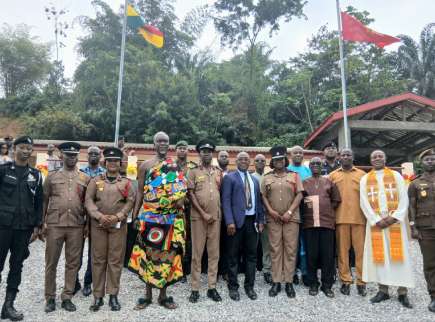
The Western Regional Command of the Ghana National Fire Service (GNFS) has commissioned a new fire station on the campus of the University of Mines and Technology (UMaT) in Tarkwa.
The facility would help enhance emergency response and improve community safety in the Tarkwa-Nsuaem Municipality.
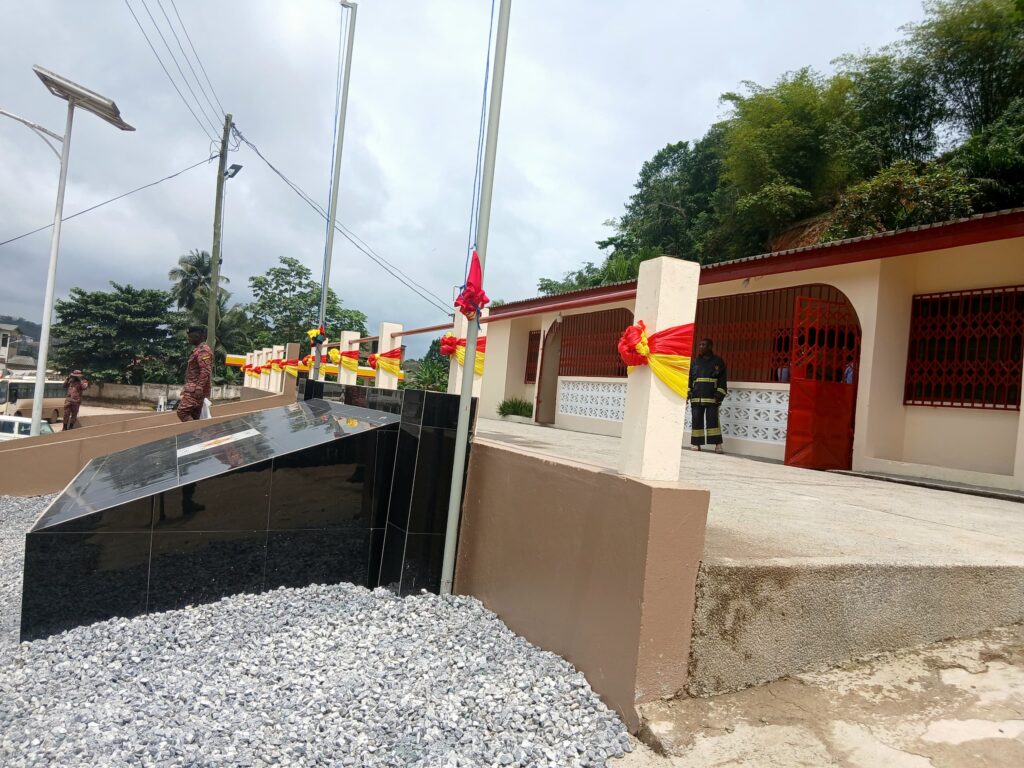
It comprises an office for the Divisional Fire Officer, administrative and operational suites, as well as a watch room, crew room and common room.
The establishment of the station was prompted by lessons from the Appiatse explosion disaster and UMaT’s commitment to strengthening campus and community safety.
To support the initiative, the management of UMaT allocated land and provided the facility for use by the GNFS.
Strategically located on the university campus, the station is expected to help eliminate delays caused by traffic congestion and significantly reduce response times to fire outbreaks, rescue operations and road traffic incidents.

Deputy Chief Fire Officer (DCFO) Roberta Aggrey Ghanson, Director of Operations at the GNFS, commended UMaT for its foresight and investment in the construction of the facility.
She said the fire station would complement the efforts of the Service in protecting lives and property and responding effectively to fire and related emergencies.
DCFO Ghanson assured the university community and residents of the municipality that the station would be fully utilised to provide emergency services, undertake safety audits and intensify public fire safety education.
She appealed to corporate organisations and philanthropists to support the GNFS with a pickup vehicle for outreach programmes and accommodation facilities for operational staff stationed at the facility.
Prior to the commissioning ceremony, a GNFS delegation led by Assistant Chief Fire Officer (ACFO) Cecil B. R. Addo, Western Regional Fire Commander, paid a courtesy call on Professor Richard Kwasi Amankwah, Vice-Chancellor of UMaT.
The visit was to express the Service’s appreciation to the university’s management and to finalise operational arrangements for the effective management of the station.