
Dr David Wilfred Ochan, the United Nations Population Fund (UNFPA) Country Representative in Ghana, has urged policymakers to involve young people, particularly women and girls, in decision-making to shape their futures and contribute to national development.
He said young people should not be viewed merely as beneficiaries of development programmes, but as partners and agents of change whose perspectives and experiences were essential to addressing challenges affecting society.
“Let us listen to young people and, most importantly, let us make room for them at the decision-making table,” he said.
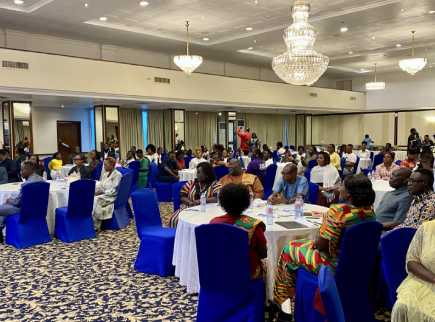
Dr Ochan was speaking at the maiden Image of a Woman Conference 2026 in Accra, organised by the Purim African Youth Development Platform (PAYDP) and Glorious Abundant Ministries International, on the theme: “Empowered to Influence, Equipped to Lead, Created to Impact.”
The event brought together about 200 stakeholders from various sectors of the country to discuss women’s leadership, empowerment, entrepreneurship, mentorship and social transformation.
Dr Ochan said investing in young people should not be considered charity but an investment in the future of families, communities and the nation.
The youth, when provided with appropriate opportunities, skills, confidence and platforms, could become catalysts for positive change in their families and communities, he said.
Dr Ochan commended the Executive Director of PAYDP, Reverend Aku Xornam Adzraku-Kevi, for her longstanding commitment to empowering vulnerable young people, particularly girls.
He said her work had supported vulnerable girls, including female head potters (Kayayei) and adolescent mothers, through skills training, reproductive health education, HIV prevention, protection from sexual abuse and alternative livelihood opportunities.
Some beneficiaries had transitioned from carrying loads in markets to acquiring skills in tailoring, painting and other trades, while others had established enterprises and accessed markets beyond Ghana, he added.
Dr Ochan cited the recent training of 25 young women in various trades, describing the initiative as “25 new possibilities” for the beneficiaries to earn decent incomes, create jobs and inspire others.
He, however, cautioned that skills training alone was not enough, highlighting the need for access to markets, financing, mentorship, and sustainable economic opportunities.
He, therefore, called on the Government, civil society organisations, development partners, the private sector, traditional leaders and consumers to help create markets for products produced by young women.
The UNFPA Country Rep. suggested that supermarkets and other large businesses could deliberately connect with young entrepreneurs to create demand for their products and enable them to expand production.
Dr Ochan disclosed that the UNFPA, in partnership with PAYDP and other stakeholders, had supported the establishment of enterprise development centres in Kumasi and other strategic locations to provide vulnerable young women, including Kayayei, with practical skills and sustainable livelihood opportunities.
The UNFPA was also partnering with the Ministry of Gender, Children and Social Protection, and the Office of the Vice President to develop a national vulnerability framework to identify and address factors that pushed and pulled people into vulnerable forms of work.
He said the framework would support a coordinated national response and create opportunities for government and development partners to support vulnerable populations.
Prophet Prince Manasseh Atsu, Founder and General Overseer of Watered Garden Church, a special Guest of Honour, said leadership should not be defined by position, titles or occupation of prestigious offices, but by the ability to influence others positively and take responsibility.
Everyone had leadership potential, but effective leaders should be problem-solvers, results-oriented and visionary, he added.
The clergyman identified faith, wisdom and love as essential qualities of effective leadership, saying faith provided courage and vision, wisdom enabled leaders to solve problems and exercise discernment, while love remained indispensable to leadership.
Drawing on the biblical accounts of Joseph and Naaman’s maid, he urged participants not to allow difficult circumstances, social status or lack of formal authority to prevent them from exercising positive influence.
Ms Abigail Nti Tenewaah, Consultant at FORWARD UK, an African women-led women’s rights organisation, reinforced the message by challenging participants to view leadership as a daily practice rather than a position or title.
In a presentation titled: “We Are All Leaders,” she said people demonstrated leadership through everyday choices, influence, responsibility and service to others.
She urged women and girls to see themselves as agents of change rather than mere beneficiaries of development interventions, noting that people who experienced social problems directly often possessed valuable insights into their solutions.
The Consultant said effective leadership began with self-leadership, requiring individuals to understand their values, recognise their strengths and confront self-doubt.
She identified courage, self-awareness, listening, integrity, communication, influence, and collaboration as qualities necessary for effective leadership.
Ms Nti Tenewaah challenged participants to identify where their leadership was needed and make concrete commitments to create change within 30 days.
She said leadership could take different forms, including bringing people together, amplifying the voices of others, modeling positive behaviour, and connecting people to opportunities and resources.
The conference, partnered by UNFPA, Forward UK, International Needs, PrimeCert, and Adehyeɛ Mma, among others
It honoured veteran media personality, Madam Rosemary Ardayfio, for her contribution to journalism, media excellence and mentorship.