
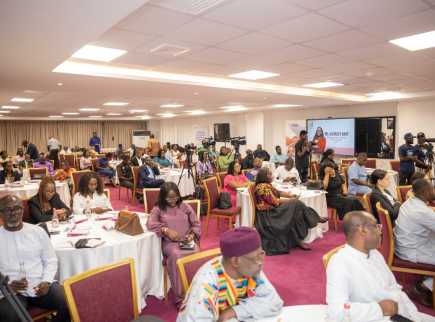
The National Commission for Civic Education (NCCE) has raised concerns that misinformation, disinformation, hate speech and deepfakes threaten Ghana’s democratic stability and social cohesion.
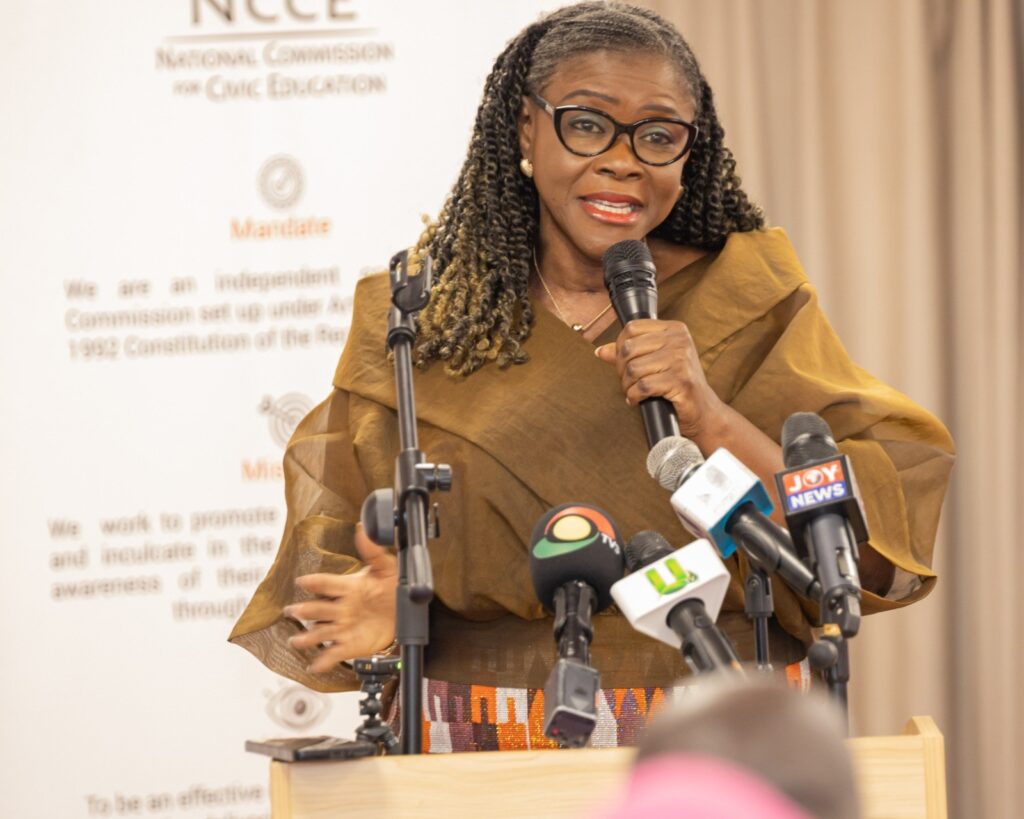
Ms Kathleen Addy, Chairperson of the NCCE, said the rapid evolution of digital communication had expanded opportunities for civic participation but made it increasingly difficult for citizens to distinguish facts from falsehoods.
Sheshe raised the concern at a Press Soirée organised by the NCCE in Accra on the theme: “Strengthening Civic Education through Strategic Partnerships.”
Ms Addy said the ability to create convincing but fabricated images, videos and audio recordings meant that citizens could no longer rely solely on what they saw or heard as evidence.
“We have entered an age in which seeing and hearing can no longer on their own be treated as proof,” she said.
The event brought together senior media practitioners, stakeholders and civic education advocates to strengthen collaboration between the NCCE and the media in promoting civic consciousness, constitutional democracy and national cohesion.
Ms Addy said the media remained a critical partner of the Commission because its reach and influence were essential to amplifying civic education initiatives and helping citizens engage meaningfully with national issues.
She urged journalists and media organisations to uphold accuracy, fairness, independence and professional ethics, particularly in an environment where information could reach thousands of people within seconds.
“A free media that is not guided by accuracy and fairness, ethics can damage the very democracy that makes its freedom possible,” she said.
Ms Addy noted that the 1992 Constitution provided strong protections for media freedom and independence under Chapter 12, while Article 162 placed a responsibility on the media to uphold constitutional principles and hold governments accountable.
She said the repeal of criminal libel and seditious laws in 2001 had further strengthened Ghana’s democratic development, adding that investigative and public-interest journalism had contributed significantly to exposing corruption, administrative failures and human rights violations, while giving vulnerable communities a voice.
However, she said freedom from criminal sanctions should not be mistaken for freedom from professional responsibility.
Ms Addy also acknowledged the economic pressures facing media organisations, noting that responsible journalism required substantial resources, and urged practitioners to balance commercial sustainability with their democratic responsibilities.
She said civic education was a shared responsibility and called on the media to promote truth, tolerance and responsible communication.
“The work that you do does matter. The questions you ask matter. The stories you choose to tell and how you tell them, it matters,” she said.
“You are not simply recording Ghana’s democratic journey, you are shaping it.”
The Speaker of Parliament, Mr Alban Sumana Kingsford Bagbin, also urged the NCCE and the media to deepen their collaboration to promote civic awareness, strengthen constitutional democracy and foster national cohesion.
In a speech read on his behalf, he said sustained partnerships among Parliament, the NCCE, the media, civil society organisations, religious and traditional leaders, educational institutions, development partners and the private sector were essential to building an informed and responsible citizenry.
Mr Bagbin stressed that democracy could not be sustained through elections alone, saying citizens must understand their rights and responsibilities and participate actively in decisions affecting their lives.
“Elections are important, but democracy is much more than the periodic act of casting a ballot,” he said.
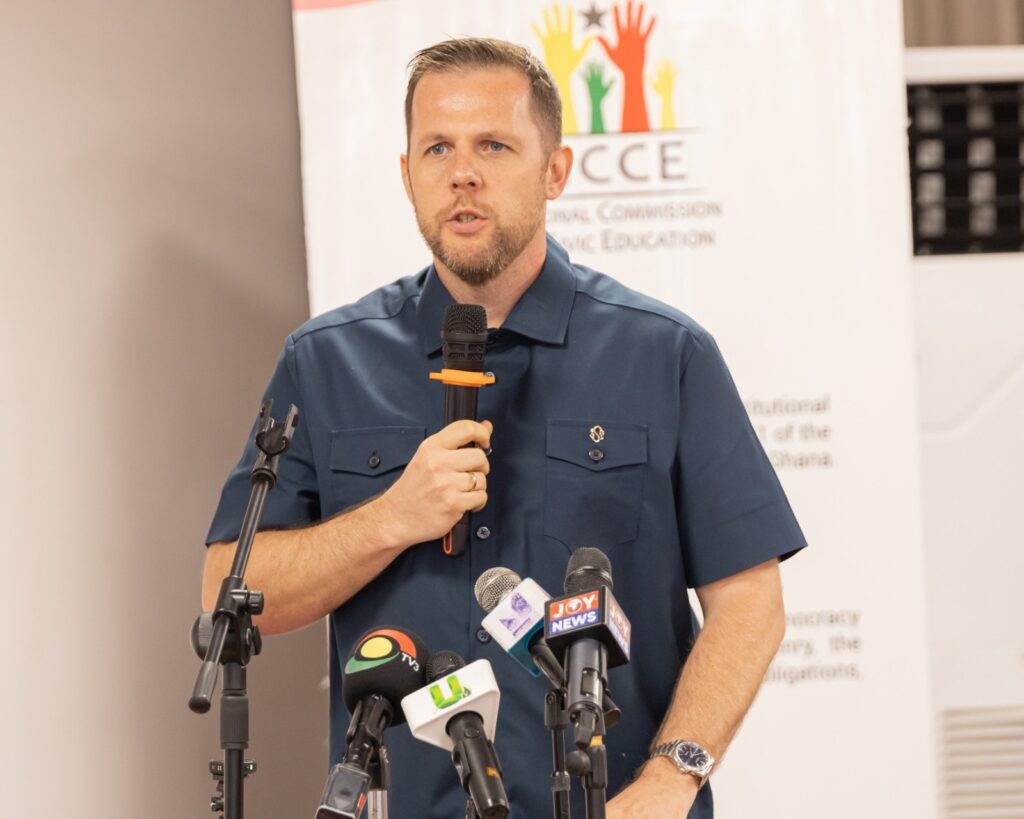
Mr Jonas Claes, Deputy European Union (EU) Ambassador to Ghana, reaffirmed the EU’s support for the NCCE and Ghana’s democratic institutions, saying the Union shared Ghana’s commitment to democracy, the rule of law and a free press.
He said the media had an important responsibility to provide accurate information and serve as a watchdog, particularly during elections and other critical national processes.
“We should not take that for granted,” he cautioned, warning that disinformation could undermine public trust and poison democratic debate.
Mr Claes said the EU was supporting a new African Media Integrity and Resilience Programme to strengthen journalistic skills in information verification and investigative reporting.
He also assured the NCCE of the EU’s continued support through GIZ to strengthen the rule of law and combat corruption.