
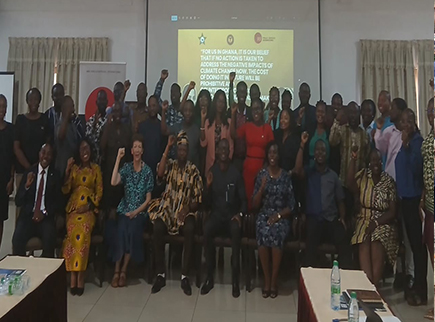
Mr Daniel Oberko, Regional Secretary for Africa and Arab Countries of Public Services International (PSI), has called on Trade Unions to leverage collective bargaining agreements as a critical tool to address the growing impact of climate change on the health sector.
He said Unions must move beyond advocacy and actively use workplace agreements to influence policies and practices that protect health and care workers whose conditions of work are increasingly affected by climate-related challenges.
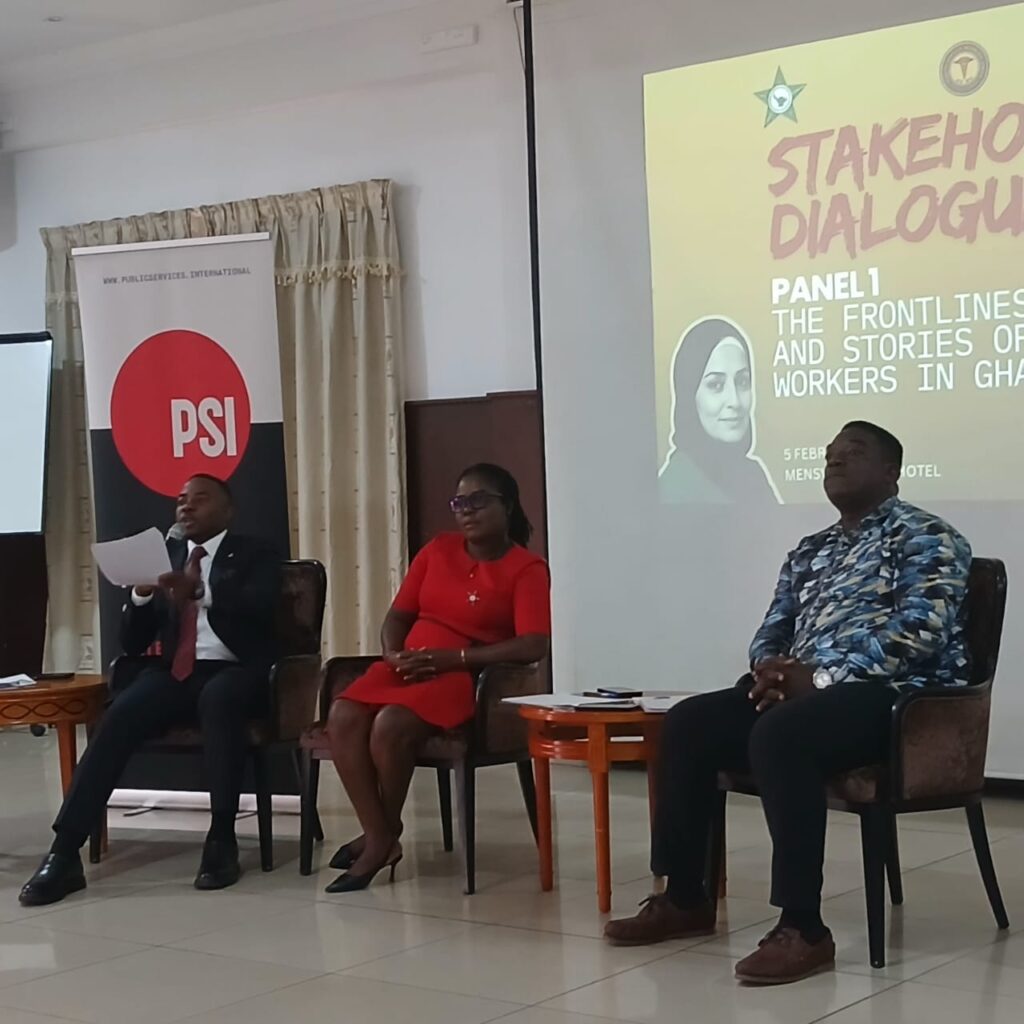
Mr Oberko made the call during a Stakeholders’ Dialogue on Climate Change and Health Care in Ghana.
The event is part of “Supporting Health and Care Workers for Climate Resilience in Ghana” Project.
The Project is to enhance the resilience and well-being of health and care workers in Ghana by addressing the impacts of climate change on their working conditions and capacity to deliver care.
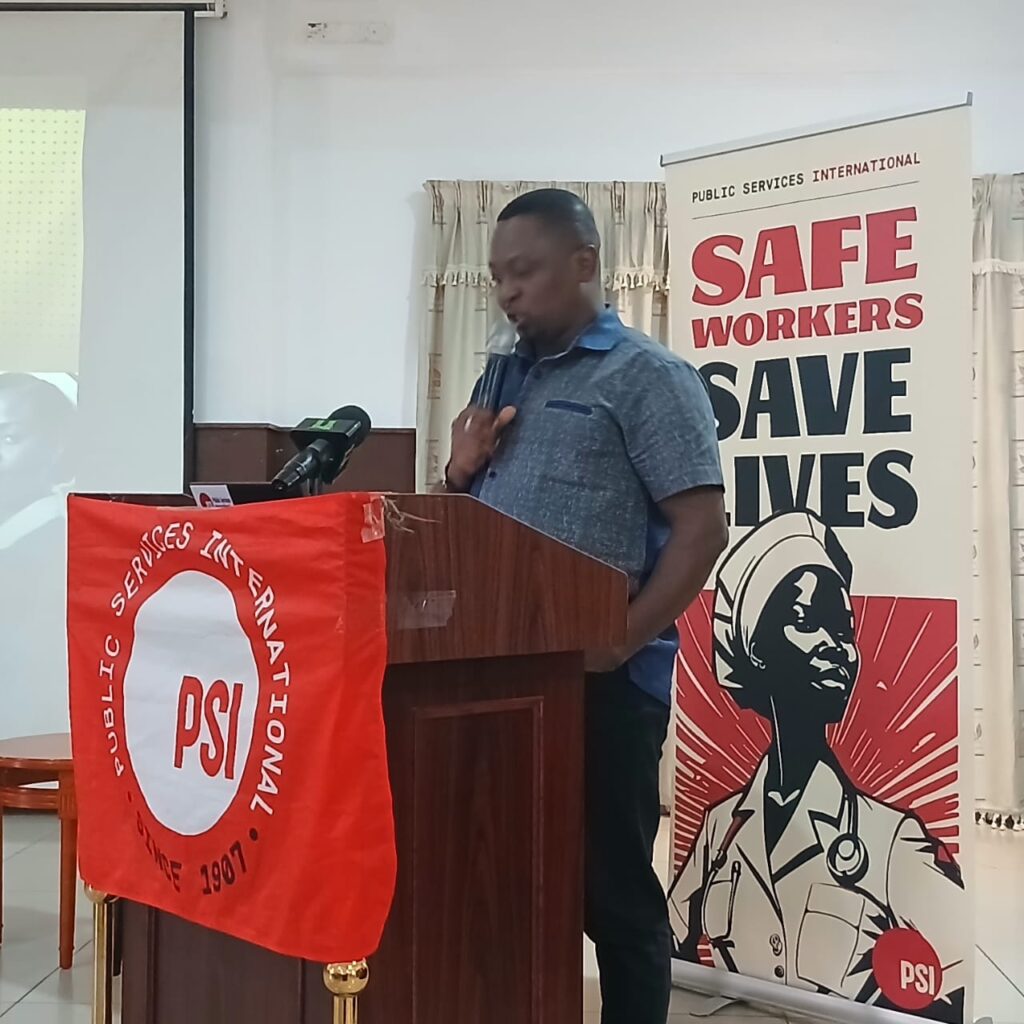
Through improved health and safety measures, capacity building, and policy advocacy, the project aims to equip these workers with the resources, skills, and platforms needed to effectively manage climate-induced health challenges.
It will ultimately strengthen the health and care system to better respond to climate-induced health impacts while safeguarding the safety, health, and rights of those on the frontlines of care.
He explained that by documenting workers lived experiences of digital reforms, Unions were able to negotiate collective agreement clauses that mitigated negative impacts on workers, while promoting learning across countries and institutions.
He said a similar approach was needed to respond to climate change, noting that policy discussions are gradually shifting from expert-led conversations to worker-led knowledge creation.
Mr Oberko said frontline workers, who experience the effects of climate change daily, must be central to shaping workplace policies and national responses.
He observed that health and care workers were already grappling with rising temperatures, flooding, damaged health facilities, disrupted supply chains, changing disease patterns and increased patient numbers, often without corresponding increases in staffing or resources.
Despite these realities, he said frontline workers’ voices were often missing from climate adaptation planning, occupational safety discussions and health infrastructure development, even though they are the first responders during climate-related crises.
He said the objective of the PSI-supported project in Ghana is to strengthen the resilience and well-being of health and care workers by improving their working conditions and capacity to deliver quality care in the face of climate change.
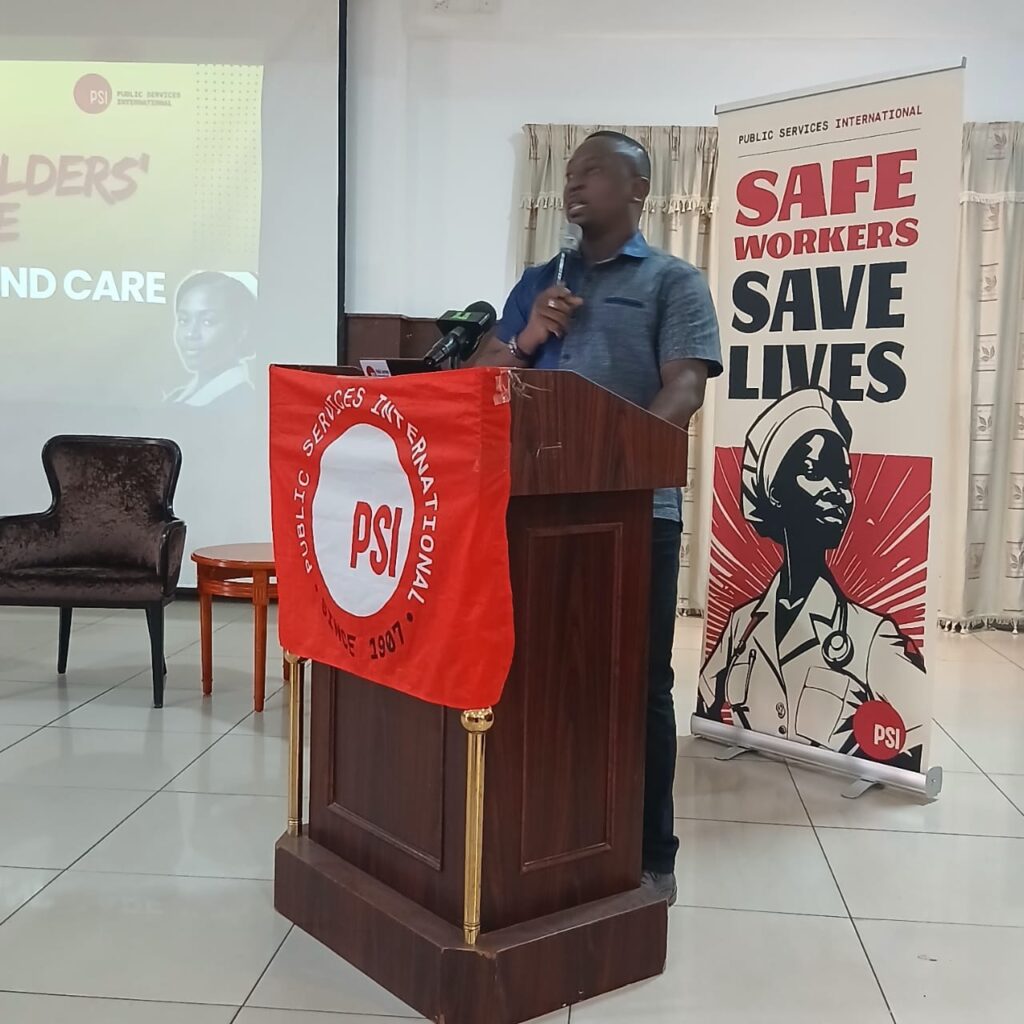
As part of the initiative, affiliates including the Health Services Workers Union and the Ghana Registered Nurses and Midwives Association have conducted about 17 action-based learning sessions, engaging 140 frontline health workers to identify risks and propose solutions.
He described the engagement as an important platform for open and practical dialogue among health workers, policymakers, government representatives, civil society organisations and the media.
He said the discussions would help identify gaps in existing systems and agree on inclusive short-, medium- and long-term solutions grounded in everyday workplace realities.
He called for stronger cooperation among institutions responsible for workplace safety, resilient health services and climate action, adding that Unions were not starting from scratch, as workers had already begun risk assessments, proposed improvements and engaged management at the facility level.
Mr Oberko urged government representatives and administrative heads present to build on these efforts by establishing stronger protections, improving health infrastructure, developing supportive policies and creating formal channels for worker representation and decision-making.
Mr Samuel Akolgo Alagkora, First Vice-President of the Ghana Registered Nurses and Midwives Association (GRNMA), said climate change had become a visible and growing threat to public health and workplace safety, with health workers bearing the brunt of its effects.
He commended the PSI and the GRNMA, the Health Services Workers Union and other stakeholders for the discussions to address the issue and called for stronger collaboration with government and civil society.