
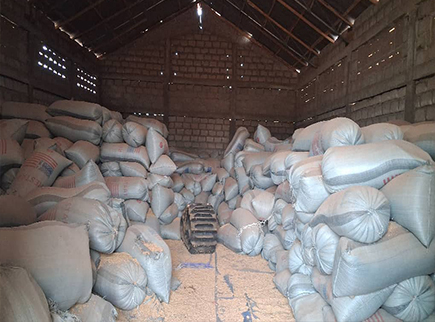
Rows of neatly stitched paddy bags of rice fill a warehouse in Navrongo, a farming community in the Kassena-Nankana Municipality known for producing staple foods and vegetables.
Stacked carefully, one on top of the other, each bag carries months of labour, rising costs and fragile hope, as the rice continues to wait for buyers who are yet to come months after harvest.
For Richard Akoka, Chairman of the Kassena-Nankana Municipal branch of the Peasant Farmers Association of Ghana (PFAG), the silence around his produce was louder than any protest he has joined.
Waiting for buyers
“In this warehouse alone, we have about 1,500 bags,” he says, pointing to the stacked paddy rice, adding, “In total, I have about 5,000 bags sitting without a market.”
Last year, a bag of paddy rice was sold at about GH¢1,200.00 at the farm gate.
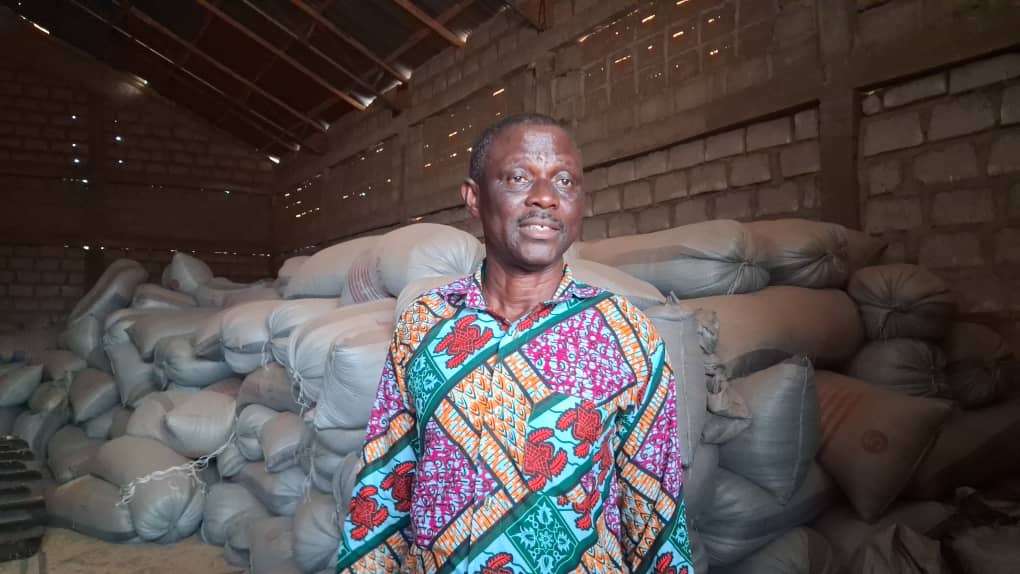
However, this year, the same bag is going for as low as GH¢250.00, and even at that price, there are no buyers, compelling farmers to be stranded and threatening to throw lots of farmers out of business.
“We have advocated, demonstrated, and done all that we could, but we have not been able to sell our rice because of lack of markets,” he lamented.
For farmers without storage facilities, the situation is even more heartbreaking, and some have left their rice outdoors, exposed to the mercy of the weather, animals and other elements.
“When I show you videos of rice left for animals to eat, you will sympathise with us,” he says.
According to the Chairman, the situation is not peculiar to him alone but affects a lot of peasant farmers who have contracted loans to undertake farming activities but could not pay back due to their inability to sell their produce.
The crisis goes beyond rice.
At the Tono Irrigation Scheme, a suburb of Navrongo, Eric Adjoawuke, a pepper farmer, abandoned his three-acre pepper farm full of ripe peppers as he could not find a sustainable market for his produce.
“The motivation is not there because fertilizer is very expensive, chemicals are expensive, labour is another headache, and after all that, there is no market,” he shared his ordeal with the Ghana News Agency.
High costs, low returns
He revealed that a bag of fertilizer costs over GH¢500, adding that some farmers apply three bags per season, which amounts to about GH¢1,500, excluding the cost of chemicals, fuel for irrigation pumps, and labour.
“Watering alone can consume fuel worth GH¢200 a week, but when it is time to harvest, the returns do not match the investment,” he added.
According to Mr Adjoawuke, peppers in the area do not have access to sustainable markets after production except to rely on market women who buy at the farm gates to retail in Navrongo and other neighbouring markets.
“The market women may promise to buy a bag of pepper at GH¢200 in the morning, only to slash the price of a basin of pepper to GH¢80.00 or less by afternoon. Three basins make a bag. At those rates, a farmer barely makes GH¢160 per bag, sometimes less than the cost of harvesting.
“The labourer who helps you harvest will take GH¢60.00, so what does the farmer gain? Nothing. We are losing,” he lamented.
Without storage facilities for perishable produce like pepper and tomatoes, farmers are often forced to accept whatever price that is offered or take the alternative, which is to watch their produce rot on the farm.
For many, abandoning the farm has become the only viable decision, and a visit to the Tono Irrigation Scheme revealed that many farmers had abandoned their pepper farms and the produce had been eaten by animals.
A system without linkages
Dr Charles Nyaaba, former Executive Director of PFAG and now its Head of Business Unit says the complaints are consistent across districts and stressed the need for action to support farmers and keep them in the business.
“Farmers are telling us they have become poorer than ever before. Their produce is lying on the farms because nobody is interested in buying,” Dr Nyaaba told the Ghana News Agency on the sidelines of the Kassena-Nankana Municipal election of PFAG.
He noted that while the cost of fertilizer, agrochemicals, mechanisation services and labour continues to rise, commodity prices are falling sharply.
Two years ago, a bag of maize sold for between GH¢500.00 and GH¢700.00. Today, farmers struggle to find buyers even at GH¢300.00.
Vegetable farmers are among the hardest hit
Navrongo, once known for tomato production, is losing its status, and women traders now travel to Burkina Faso to buy tomatoes instead of sourcing them locally.
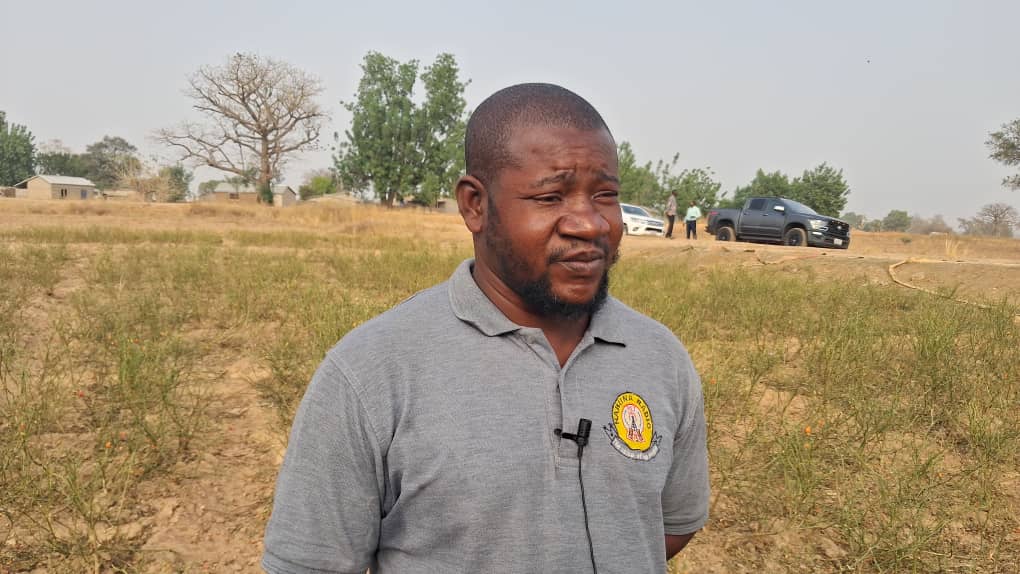
“They are not asking for handouts. They are asking for guaranteed markets,” he stated.
Farmers had hoped that government interventions, including promises to supply locally produced food to schools under the feeding programme and to boost purchases through the National Food Buffer Stock Company, would ease their burden.
But many said they have not seen aggregators or institutional buyers come to their farms.
Without structured market linkages, farmers are left at the mercy of middlemen and volatile open markets.
The result is a dangerous cycle: high production costs, low farm-gate prices, unsold stock, mounting debts and eventually throwing farmers out of business.
Across Kassena-Nankana, the question hangs heavily in the air.
The farmers say they are ready to produce and willing to contribute to national food security, but without reliable market access and policies that connect their harvest to schools, institutions and buffer stocks, their efforts feel futile.
For now, thousands of bags of rice remain stacked in warehouses, and pepper fields lie untended.
And in the silence between harvest and market, many farmers are slowly being pushed out of the very business that feeds the nation.