
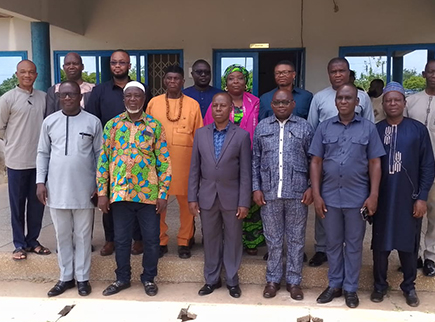
The Conference of Regional Directors of Agriculture Ghana (CORDAG) has been held in Dambai, the Oti Regional capital, to deliberate on sustainable funding for Regional and District Agricultural Departments under the decentralised system of government.
The two-day engagement was on the theme: “Sustainable Funding for Regional Agricultural Departments and District Agricultural Departments in a Decentralised System of Government.”
Speaking to the Ghana News Agency (GNA), Mr O’Brien Nyarko, the Oti Regional Director of Agriculture, said the training workshop is organised twice in a year to strengthen the capacity of regional and district directors.
He explained that the engagement is designed to equip participants with practical strategies to mobilise funds and enhance operational efficiency within their respective jurisdictions.
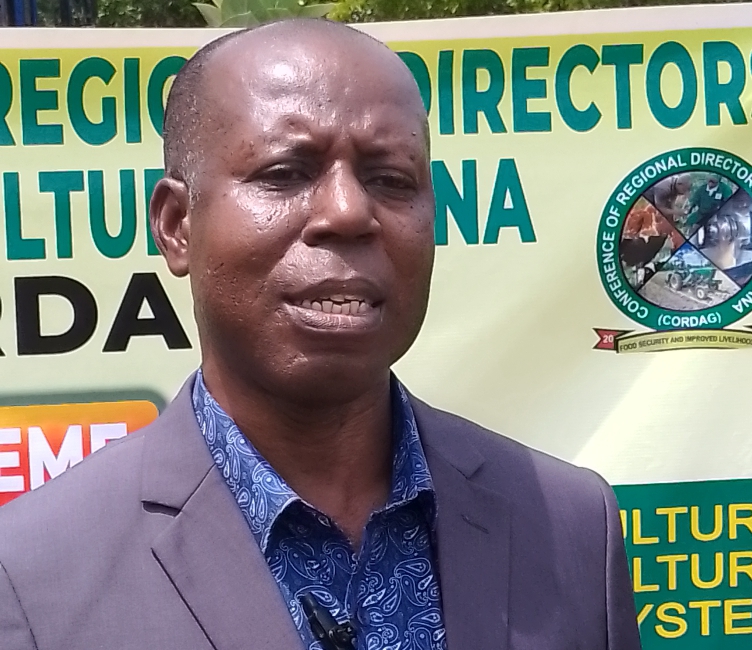
Mr Nyarko noted that agricultural extension officers played a critical role in delivering improved farming practices directly to farmers. However, he stressed that inadequate funding continues to limit their effectiveness.
He said without financial support for extension activities, government agricultural policies risk failing to achieve their intended impact.
“It is agricultural extension officers who go to farmers in their respective areas and update them on new farming methods, if regional and district agricultural directors do not have money to support their extension officers, it does not matter which policy government would introduce,” Mr Nyarko added.
He illustrated the situation with field realities, explaining that many extension officers were assigned to operational areas covering more than 20 communities and without fuel allowances or serviceable motorbikes, officers were often compelled to walk long distances or paid for transport from their own salaries.
This, he said, reduced the frequency of farm visits and limits the establishment of demonstration plots. In some cases, officers were unable to visit remote communities for extended periods, resulting in low adoption of improved technologies such as certified seeds, row planting, and integrated pest management practices.
Mr Nyarko indicated that inadequate logistics also affected monitoring and supervision. District Directors were expected to oversee extension activities to verify farmer data and report on programme implementation.
However, the lack of official vehicles and fuel allocations made regular supervision difficult, creating data gaps and weakening accountability.
At the event, Mr John Kwadwo Gyapong, Oti Regional Minister revealed that agriculture remained a cornerstone of the Ghana economy, engaging nearly 80 percent of the population either directly or indirectly.
He said the sector demanded collective responsibility and responsibility and sustained commitment from all stakeholders.
The Minister explained that Oti Region was uniquely endowed with three ecological zones, including the forest, transition, and savannah, by providing a strong comparative advantage for agricultural production.
According to him, with favourable climatic conditions and reliable rainfall patterns that supported both mono roping and mixed farming systems, the Oti Region was well positioned for year-round agricultural activities.
Addressing the participants, Mr Gyapong said farmers cultivated a wide range of crops, including rice, maize, yam, cassava, vegetables, cashew, cocoa, oil palm, and ginger.
The Minister stated that the region was not only equipped with improved technologies for cocoa cultivation but was also recognised as one of the country’s leading cocoa producing areas.