
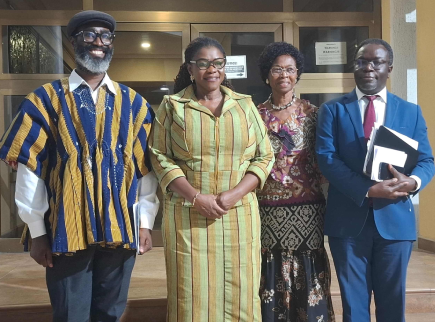
The National Commission for Civic Education (NCCE) has called for a renewed social contract that addresses youth unemployment, prepares the country for the impact of artificial intelligence (AI) on jobs, and strengthens trust between citizens and the state.
The Commission said Ghana must move beyond procedural democracy and build a more inclusive, accountable and participatory system capable of delivering economic dignity and social justice to citizens.
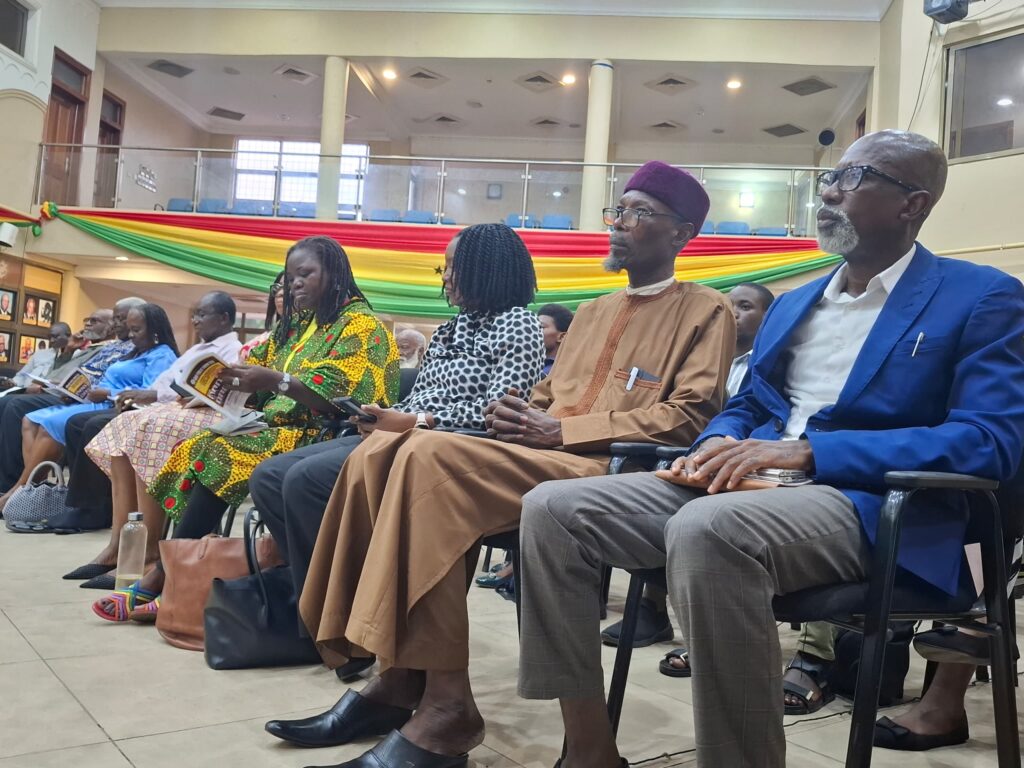
Ms Kathleen Addy, the Chairperson of the NCCE, made the call on Monday when she delivered a lecture at the opening of the Ghana Academy of Arts and Sciences (GAAS) Public Forum in Accra, on the theme: “Citizens and Democratic Consolidation in Ghana: Rights, Obligations, and Duties.”
She said Ghana’s democratic stability under the Fourth Republic remained a major achievement but warned that growing economic hardship, youth unemployment, corruption and declining trust in public institutions were weakening the country’s democratic legitimacy.
“A democratic system cannot remain legitimate while large segments of young people remain economically excluded,” she said.
Ms Addy said Ghana must guarantee pathways to economic participation through youth employment, industrial transformation, digital innovation, agricultural modernisation and equitable regional development.
She called for greater national discussion on the impact of AI on employment.
“Every day, we are reminded that AI will take our jobs. How do we plan for this in a situation where youth unemployment is already a challenge? This is a very serious thing and the public discourse around this issue must be amplified,” she said.
Ms Addy said a renewed social contract should be built on accountability, ethical leadership, institutional trust, civic responsibility and democratic participation.
“It requires rebuilding reciprocal trust between state and society. Trust emerges from lived experience, from whether citizens repeatedly see that public institutions are fair, responsive, honest, competent and accountable,” she said.
Citizens also had responsibilities under the social contract, including obeying laws, paying taxes, rejecting corruption and participating actively in democratic processes, Ms Addy said and called for stronger anti-corruption measures, more participatory local governance, constitutional reforms to reduce excessive executive power, and greater investment in civic education.
Touching on the future, she said the new social contract must also address intergenerational justice through responsible debt management, environmental sustainability, climate resilience and long-term national planning.
Dr Kofi Takyi Asante, the Senior Research Fellow at the Institute of Statistical, Social and Economic Research (ISSER), University of Ghana, said Ghana’s democratic achievements had not translated into the expected socio-economic benefits for many citizens.

He attributed the country’s governance challenges partly to the gap between strong political competition and an economy unable to meet rising public expectations.
Dr Asante said repairing the social contract would require a “fundamental agenda of resetting” capable of ushering in a more people-centred democracy, while also addressing structural economic constraints and deepening citizen participation in governance.