
Mr Fuseini Seidu, National Early Warning Systems Manager at the West Africa Network for Peacebuilding (WANEP), has called for stronger collaboration between farmers and herders to promote peaceful coexistence and strengthen resilience within the agricultural sector.
He said farmers and herders were natural partners in the agricultural value chain and should work together for mutual benefit rather than view each other as adversaries.
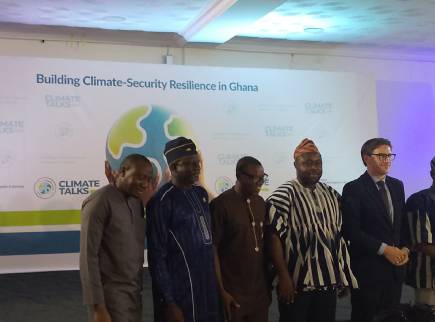
Mr Seidu made the call during a roundtable discussion at the maiden edition of the Climate Talks Series 2026 in Tamale, held on the theme: “Building Climate Security Resilience in Ghana.”
He explained that agriculture comprised both crop cultivation and livestock production, making cooperation between the two groups critical to food security, nutrition, and economic development.
“Normally, farmers and herders should be friends because agriculture includes both crop production and animal rearing. We obtain food and nutrition from both sectors, and they should complement each other,” he said.
The discussion focused on “Climate-Induced Conflicts: Farmer-Herder Relations and Illegal Mining.”
The event, organised by the German Embassy in Ghana in partnership with Media General through TV3, brought together representatives of security agencies, traditional authorities, civil society organisations, researchers, youth groups, and development partners to examine the growing links between climate change and security.
Mr Seidu attributed the increasing mistrust and conflicts between farmers and herders largely to environmental pressures caused by climate change, which has intensified competition over land, water, and other natural resources.
He explained that dry spells and erratic rainfall patterns had reduced the availability of grasses and pasture, thereby limiting grazing land for livestock and increasing pressure on both farmers and herders to compete for scarce resources.
Mr Seidu stressed the need for sustained community engagement and public education to deepen understanding of climate change and its effects on livelihoods, social cohesion, and security.
He urged stakeholders to intensify awareness creation and community-based interventions to foster peaceful coexistence and cooperation between farmers and herders.
“We cannot continue to merely observe people; we have to engage them. Through community outreach and education, people can better understand the realities they face and avoid seeing herders as enemies,” he said.
Mr Seidu called for integrated approaches that combine climate adaptation, conflict prevention, and peacebuilding initiatives to strengthen resilience in vulnerable communities.
He also highlighted the importance of involving local communities, traditional authorities, government institutions, and development partners in efforts to address climate-related security threats and promote sustainable livelihoods.