
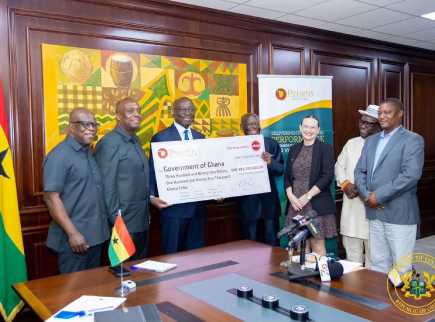
Finance Minister Dr Cassiel Ato Forson has received a GHS391 million (US$35 million) dividend payment from Perseus Mining Ghana Limited (PMGL), representing the Government of Ghana’s entitlement as a ten per cent shareholder in the company.
The dividend, presented to the Minister by the Chairman of the Board of Perseus Mining (Ghana) Limited, Ehunabobrim Prah Agyensaim VI, represents a significant increase in the company’s contribution to the State compared with the previous year.
According to the company, the latest payment translates into a dividend of US$2,890 per share, up substantially from the maiden dividend of US$413 per share declared for the 2024 financial year.
Presenting the cheque, Ehunabobrim Prah Agyensaim said the significant growth in the dividend reflected the company’s strong performance, operational excellence, prudent stewardship of resources, and the value created through its partnership with the Government of Ghana.
He said PGML was proud that its success was generating tangible returns for Ghanaians through the government’s 10 per cent shareholding in the company.
“This remarkable growth reflects the strong performance of the company, our commitment to operational excellence, prudent stewardship of resources, and the value created through our partnership with the Government of Ghana,” he said.
The Board Chairman stressed that the company’s contribution to Ghana extended well beyond dividend payments, pointing to the substantial revenues it had generated for the State through taxes, royalties, and other statutory obligations since commencing operations.
As of June 30, 2026, Perseus Mining said it had paid GHS1.72 billion (US$229 million) in mineral royalties.
The company also reported GHS4.2 billion (US$367 million) in corporate income taxes and Growth and Sustainability Levy, as well as GHS1.96 billion (US$246 million) in PAYE and other statutory taxes.
Nana Agyensaim said these payments demonstrated the company’s commitment to meeting its fiscal obligations and contributing meaningfully to Ghana’s economic growth and development.
He said the company viewed itself not merely as a mining operator but as a long-term corporate partner in Ghana’s economic development.
Nana Agyensaim used the occasion to call for continued collaboration between the Government and the mining industry, particularly in creating a stable, predictable, and competitive business environment capable of attracting further investment.
He said the prospects for Ghana’s minerals sector remained promising, but unlocking additional investment and maximising the long-term benefits of mining would require greater certainty around government policies and the regulatory environment.
Among the areas he identified as critical were policy stability and consistency, fiscal certainty and predictability, efficient regulatory processes and permitting frameworks, continued support for responsible and sustainable mining operations, and constructive engagement between government, investors, and host communities.
According to him, these conditions would enable mining companies such as Perseus to make further investments in exploration, mine development and operational expansion.
“Greater investment will support increased production, higher revenues to the State through taxes and royalties, larger dividend payments to Government, sustainable employment opportunities for Ghanaians, and enhanced social and economic development within our communities,” he said.
Ehunabobrim Agyensaim emphasised that a predictable investment environment was important not only for mining companies and their shareholders but also for the government and the communities that depend on mining activity.
He said long-term certainty would give companies greater confidence to commit additional capital to Ghana while ensuring that the state continued to benefit through taxes, royalties, dividends, and employment.
Beyond its fiscal contributions, PMGL also highlighted its social investment programmes in the communities where it operates.
Nana Agyensaim said the company continued to support initiatives in education, healthcare, infrastructure development, skills training, and local enterprise development.
These interventions, he noted were aimed at improving the livelihoods of people in host communities and ensuring that the benefits of mining extended beyond government revenues and company profits.
He reaffirmed the company’s commitment to responsible and sustainable operations, stressing the importance of maintaining strong relationships with government and host communities.
The company believed that constructive collaboration among all stakeholders was essential to ensuring that natural resource development produced lasting economic and social benefits for Ghana.
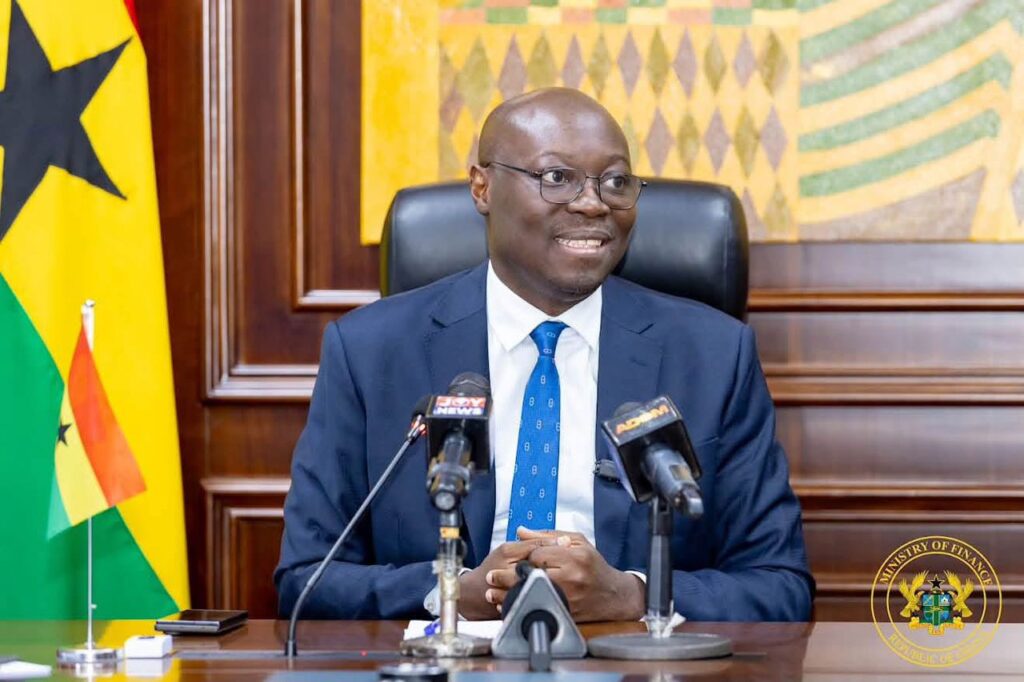
Receiving the cheque on behalf of the Government, Dr Forson said the increase in the dividend demonstrated improved profitability within the company and underscored the importance of ensuring that Ghana derived greater value from its natural resources.
He noted that the increase from about US$5 million previously to US$35 million represented a significant improvement in the returns accruing to the State as a shareholder.
He stressed that the development also reflected the impact of higher gold prices on the international market and reinforced the need for resource-owning countries to benefit when commodity prices and company profitability increase.
The Minister said the government’s decision for the ten percent was to create a system that allowed companies to remain profitable and attractive to investors while ensuring that Ghanaians, as owners of the country’s natural resources, received a fair share of the economic gains.
He stressed that policies aimed at increasing the state’s benefit from natural resources should not be interpreted as being anti-business.
Dr Forson acknowledged the need for predictability in Ghana’s fiscal and policy environment but questioned whether a 25-year stability agreement was appropriate in a rapidly changing global economy.
He said governments needed some flexibility to respond to unforeseen economic developments, citing Ghana’s 2022 economic crisis as an example of circumstances that could not easily have been predicted decades earlier.
“Nobody knows how the world will look like in the next 25 years,” he said.
The Minister assured mining companies that, in the medium term, the government did not intend to introduce additional taxes on the industry beyond the existing fiscal framework.
He said the corporate income tax and royalty regimes currently in place were adequate, while noting that the royalty structure was designed to respond to changes in global commodity prices.
Dr Forson also indicated that the government would continue to review the Growth and Sustainability Levy, noting that it had already been reduced from three per cent to one per cent.
He said the government remained committed to maintaining a fiscal regime that supports economic stability while ensuring that the country derived appropriate value from its mineral resources.
The Minister commended Perseus Mining for its contribution to Ghana and urged other mining companies to emulate its example by ensuring that the state received appropriate returns from its equity participation in the sector.
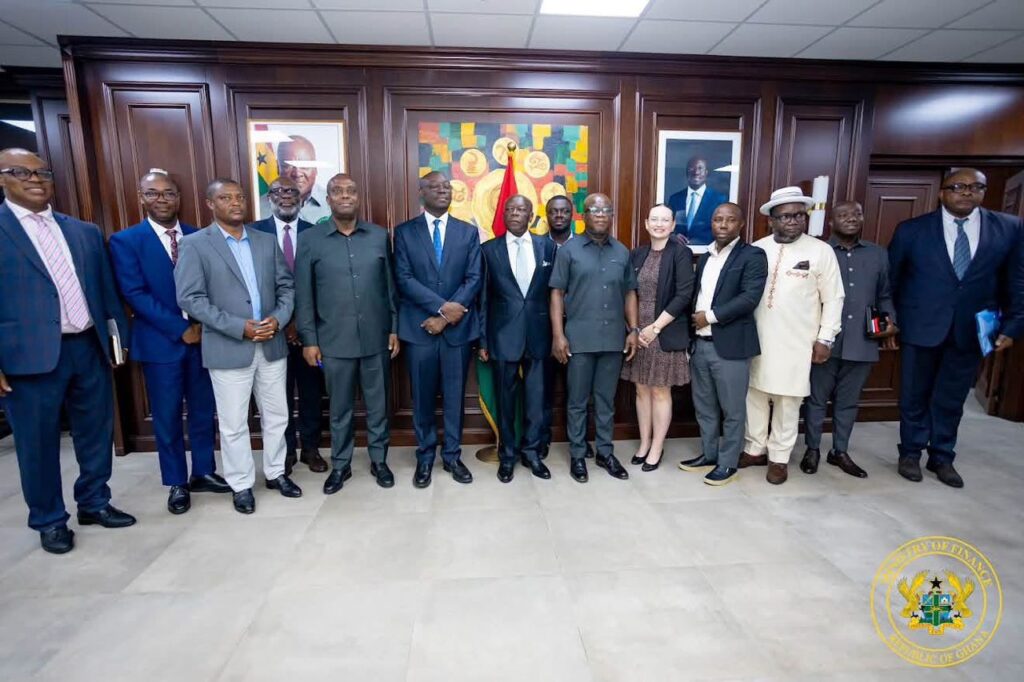
He said the government would continue to engage investors to create the conditions necessary for further investments, increased production, job creation, and greater revenues for the state.
The presentation of the GHS391 million dividend therefore marked not only a financial return to the government but also renewed calls for a stronger partnership between the State and mining companies to ensure that Ghana’s mineral wealth delivers sustainable benefits to its citizens.