
Marine conservation stakeholders have called for stronger partnerships with coastal communities to protect Ghana’s endangered sea turtle populations and their habitats.
They said increasing pressures from coastal development, pollution, climate change and human activities threatened gains made in sea turtle conservation.
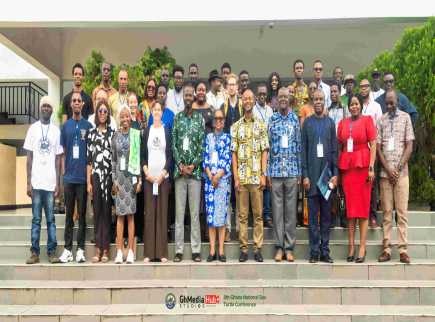
The stakeholders made the call at the 5th Ghana National Sea Turtle Conference (GNSTC 2026), held at the University of Ghana in Accra.
It was held under the theme: “Sea Turtle Conservation in Ghana: Strengthening Community Stewardship for Lasting Impact.”
Dr Andrews Agyekumhene, Executive Director of the Wildlife and Human Resource Organisation (WHRO) Ghana, said scientific research, legislation and law enforcement remained important, but the long-term survival of sea turtles would largely depend on actions within coastal communities.
He said the conference, established in 2018, provided a platform for stakeholders to exchange knowledge, experiences and practical solutions to advance sea turtle conservation.
“Empowering communities to understand the value of sea turtles, participate in monitoring and decision-making, and benefit tangibly from conservation efforts will help create sustainable stewardship beyond the lifespan of individual projects,” he said
Dr Agyekumhene said sea turtle conservation efforts continued to face threats from coastal development, pollution, climate change, human activities and interactions with fisheries.
He also identified illegal mining and its effects on coastal and marine ecosystems as emerging concerns requiring urgent attention.
Sea turtles serve as indicators of ocean health, making their protection important to the sustainability of marine resources and the livelihoods of coastal communities.
Dr Benjamin Osei Botwe, Head of the Department of Marine and Fisheries Sciences at the University of Ghana, said the condition of sea turtle populations reflected the broader state of the marine environment on which many communities depended for food and income.
He said Ghana had made progress in sea turtle conservation through research, public education, community engagement and collaborative management initiatives.
However, persistent threats continued to endanger turtle populations and their habitats.
Dr Botwe urged conservationists and researchers to focus on emerging issues, including the effects of climate change on nesting beaches, satellite tracking technologies, ecological monitoring, marine pollution, habitat restoration and the integration of traditional ecological knowledge into conservation efforts.
He said the University remained committed to generating scientific knowledge to support the management and conservation of Ghana’s marine and fisheries resources through research, teaching and outreach programmes.
Mr Attah Kusi, Operations Manager of the Wildlife Division of the Forestry Commission, said all four sea turtle species recorded in Ghana were fully protected under the country’s wildlife laws and classified under Schedule One of the national legal framework.
He said despite the legal protection, sea turtles continued to face threats from poaching, egg harvesting, habitat destruction and accidental capture in fishing gear.
Mr Kusi said Ghana’s wildlife conservation legislation had evolved significantly since independence and had been strengthened through successive regulatory reforms.
He said the Wildlife Resources Management Act, enacted by Parliament in 2023 and assented to in 2024, was designed to address gaps and implementation challenges in the previous legal framework.
Mr Kusi cautioned individuals and organisations against removing sea turtles or their eggs from the wild without the necessary permits and licences.
He urged institutions involved in sea turtle conservation to comply with legal requirements, stressing that effective enforcement and community participation were essential to safeguarding Ghana’s marine biodiversity.
The conference ended with a call for collaboration among government institutions, researchers, conservation organisations and coastal communities to ensure lasting protection of Ghana’s sea turtles and their habitats.