
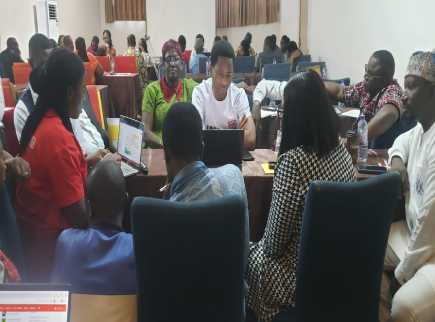
The Ghana AIDS Commission (GAC) has ended a-two-day training workshop on HIV and Tuberculosis (TB) with a call on stakeholders to strengthen collaborations for the nation to achieve the ‘95-95-95’ target for active epidemic control.
The UNAIDS 95-95-95 targets are global goals designed to diagnose, treat, and suppress HIV to help end the AIDS epidemic.
That implies that 95 percent of all people living with HIV know their HIV status, 95 percent of diagnosed individuals receive sustained antiretroviral therapy (ART) and 95 percent of people receiving ART achieve viral load suppression by 2030.
Mr Isaac Doe Kwao, the Director, Research Monitoring and Evaluation at the GAC who made the call said the commission required stakeholders support for the nation to ensure equity and equality in accessing healthcare services.
The GAC in collaboration with the Commission on Human Rights and Administrative Justice (CHRAJ) with support from the Joint United Nations Programme on HIV/AIDS (UNAIDS) and the Global Fund organised the workshop at Abesim, near Sunyani.
It forms part of a nationwide series being held across the southern, middle, and northern zones to address stigma, discrimination, and human rights issues associated with HIV and TB.
The workshop was attended by legal practitioners, traditional leaders, law enforcement officers, educators, and civil society actors.
Mr Kwao spoke on behalf of Dr Kharmacelle Prosper Akanbong, the Director General of the GAC, saying that the commission remained dedicated to ensuring that the nation had zero HIV new infection and death.
He said the GAC was hopeful that the participants would go back to their respective communities and implement the knowledge acquired and to help stem public stigmatization and discrimination of persons living with HIV.
Mr Kwao reminded the stakeholders that the GAC required their support to empower local communities in the nation’s HIV response.
Mrs Mercy Larbi, the Deputy Commissioner of CHRAJ commended the participants for the active participation in the training and urged them to go back and contribute their quota towards fighting HIV stigmatization which remained a burden for the nation now.
She said the stakeholders could do that if they upscale public education and help erode certain wrong perceptions and myths surrounding HIV, worrying that those misconceptions fueled stigmatization and discrimination.
The participants were taken through topics like ‘myths and buster’ ‘workplace policy and HIV/TB human rights strategic plan 2026-2030’, and ‘strengthening systems for tracking, reporting, and addressing HIV/TB’ as well as ‘challenges and opportunities for legal assistance institutions to address HIV-related stigma and discrimination”.
There were also panel discussions on the ‘the role of legal assistance institutions in access to justice’ and ‘the role of communities and civil society actors in addressing and responding to HIV/TB-related human rights”.