
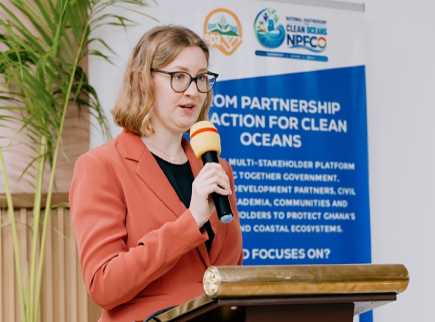
Germany is ready to share its experience and best practices with Ghana to help transform waste into economic value, Madam Leonie Reese, Charge d’Affaires of the German Embassy in Ghana, has said.
She said Ghana already had many ideas, projects and expertise in plastic waste management, but stakeholders needed to examine why some interventions were not achieving the desired results.
Madam Reese said Germany’s best practices should not be copied directly, but adapted to Ghana’s circumstances, with government, civil society, researchers, businesses and citizens working together to address plastic pollution.
Addressing stakeholders at a National Plastics Policy Dialogue in Accra on Friday, she said their approach to waste management was based on three key pillars: avoid, reuse and recycle, supported by policies and systems that encouraged responsible waste management.
Madam Reese also cited their deposit-return system for plastic bottles, where consumers paid an additional fee when purchasing bottled drinks and received a refund upon returning the bottles, as an incentive that encouraged high return rates.
She also highlighted Germany’s Extended Producer Responsibility (EPR) system, under which producers remained responsible for their plastic products after sale and contributed to recycling and waste management.
Madam Reese said strict legislation, waste separation and public education were also crucial, noting that German households separated plastic, paper, glass and biodegradable waste to maximise the value of recyclable materials.
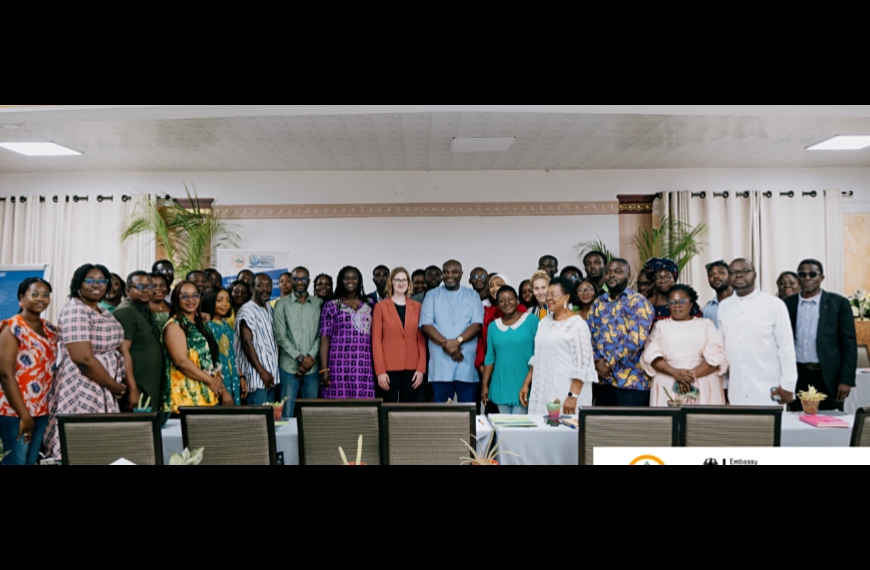
She said Germany, through GIZ and private-sector partners, was supporting waste-management initiatives in Ghana targeting women and the youth to create jobs, improve working conditions and formalise the sector, while also supporting environmentally responsible e-waste management.
Prof Nana Ama Browne Klutse, Chief Executive Officer, Environmental Protection Agency (EPA), said efforts were being expedited for urgent implementation of Ghana’s policies and strategies to tackle the plastic pollution engulfing the nation.
She said the challenge went beyond environmental concerns, affecting public health, livelihoods, flooding, biodiversity and the economy, particularly through plastics choking drains and waterways.
Prof Browne Klutse said the implementation required stronger coordination among government institutions, local and traditional authorities, civil society, academia, the private sector, the media and communities.
She urged producers to take greater responsibility for plastics and packaging introduced into the market, while encouraging investment in sustainable production, recycling, reuse and other circular economy solutions.
She said plastic waste should be viewed as a raw material and an economic opportunity, capable of creating green jobs, recycling enterprises, innovation and opportunities for young entrepreneurs, while protecting Ghana’s waterways and oceans.