
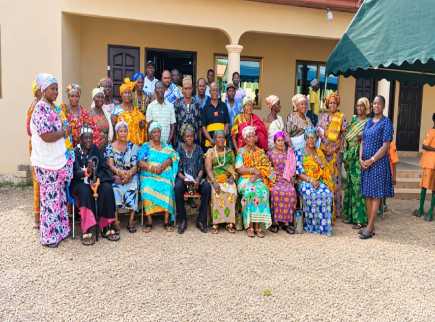
Nanega Mariama Fomedigbe II, the Queenmother of the Fievie Traditional Area, has called for intensified community-level action to address teenage pregnancy and substance abuse among young people.
She urged traditional authorities and other stakeholders to take a more active role in protecting the future of adolescents.
She said the rising incidence of teenage pregnancy and growing exposure of young people to substance use required a coordinated response involving traditional leaders, parents, schools, health professionals, community organisations and the youth themselves.
Nanega Fomedigbe made the call at an engagement on teenage pregnancy and drug abuse at Fievie-Dugame in the South Tongu District of the Volta Region.
She urged young people, particularly adolescent girls, to desist from behaviours that could jeopardise their health, education and future prospects, and instead channel their energies into productive pursuits capable of building their confidence, skills and economic independence.
The Queenmother encouraged the youth to take advantage of skills training, handicrafts, vocational education, entrepreneurship and other capacity-building opportunities, saying acquiring practical and marketable skills could position them for sustainable livelihoods and reduce their vulnerability to negative social influences.
She said the issue of teenage pregnancy should not be treated merely as a health concern but as a broader social and developmental challenge, given its potential implications for education, economic empowerment and the long-term wellbeing of affected adolescents.
The call comes against the backdrop of increasing teenage pregnancy figures recorded in the district.
District health data presented at the engagement showed that 190 teenage pregnancy cases were recorded between January and June 2026, representing 11.6 per cent, compared with 166 cases, or 9.5 per cent, during the corresponding period in 2025.
The 2026 mid-year figure, the data indicated, had therefore exceeded the national threshold of 11.5 per cent, highlighting the need for intensified preventive interventions within communities.
The district recorded 217 cases, representing 14.7 per cent, in 2024, indicating fluctuations in the prevalence of teenage pregnancy over the period and the continuing need for sustained preventive measures.
The health presentation identified several determinants associated with teenage pregnancy in the district, including a high incidence of unprotected sexual activity due to non-adherence to dual protection, substance use and abuse, sexual and gender-based violence, limited adolescent- and youth-friendly services and education materials, and inadequate comprehensive sexuality education both in and out of school.
Other factors identified included the low socio-economic status of many caregivers and high dependency rates, as well as barriers in reporting pathways, including delayed referrals.
Nanega Fomedigbe said such challenges underscored the need for traditional leaders to move beyond ceremonial roles and become active partners in community education, prevention and youth development.
She said Queenmothers, by virtue of their close interaction with families and communities, were strategically positioned to influence social behaviour and provide guidance to adolescents, particularly girls who might be vulnerable to early sexual activity, substance abuse and other social pressures.
She explained that the engagement was intended to sensitise traditional leaders and other stakeholders so they could carry the prevention message to their respective communities and help create a stronger support system for young people.
The Queenmother said the participation of Queen Mothers from different traditional areas demonstrated a shared commitment among traditional leaders to confronting social challenges that could undermine the wellbeing and future of the younger generation.
She therefore called on fellow Queen Mothers, chiefs, parents and community leaders to intensify advocacy against teenage pregnancy and drug abuse, while promoting education, skills acquisition, discipline and responsible decision-making among adolescents.
Nanega Fomedigbe further urged parents and guardians to take a more active interest in the development and social lives of their children, stressing the importance of open communication and responsible parental supervision in preventing young people from becoming victims of negative social influences.
Mrs Rachelle Elikem Zewu, the Public Health Nurse at the District Health Directorate, said the teenage pregnancy situation required sustained preventive education and stronger collaboration among health institutions, traditional authorities, parents, schools and community stakeholders.
She stated that the identified determinants demonstrated that teenage pregnancy was influenced by a combination of behavioural, social and economic factors, making it necessary for interventions to address not only sexual and reproductive health information but also the wider circumstances in which adolescents lived and made decisions.
Mr Seth Fiagorme, the District Director of the National Commission for Civic Education (NCCE), said addressing teenage pregnancy and drug abuse required a collective societal response, with families, traditional institutions, schools and community leaders playing complementary roles in shaping the behaviour and values of young people.
He urged adolescents to appreciate the long-term consequences of their choices and use their formative years to acquire education, skills and positive values that would enhance their prospects and enable them to contribute meaningfully to their communities.
Mr Fiagorme also encouraged traditional leaders to sustain community education on teenage pregnancy, substance abuse and responsible citizenship, saying consistent engagement was essential to influencing attitudes and behaviours among young people.
The programme was organised by the Nanega Development Initiative (NADI), with the support and participation of 20 Queen Mothers from various traditional areas in the southern part of the Volta Region.
It received financial support from the Rotary Clubs of Manchester and Ho, which contributed significantly to its successful implementation, while individuals and other local stakeholders provided various forms of in-kind support to complement the efforts of the organisers.