
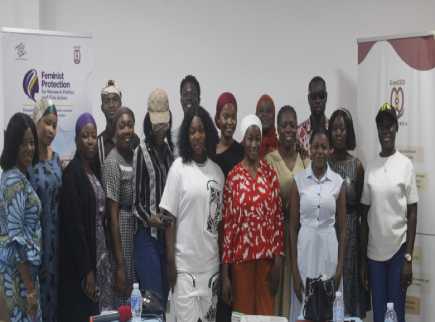
The Gender Centre for Empowering Development (GenCED) has urged women in politics and young civic activists to build resilience against online abuse, intimidation and other forms of digital violence that threaten their participation in public life.
The Centre said increasing incidents of hate speech, harassment, cyberbullying and digitally manipulated content, including fake nude images generated with Artificial Intelligence (AI), were discouraging women and young people from speaking out on governance and national issues.
At a training workshop organised by the GenSED for women in politics, the Centre encouraged them to remain focused while ensuring their mental wellbeing.
Ms Benedicta Adjo Atidigah, the Programme Officer, said it was necessary to equip women in politics, civic activists and journalists with practical skills to protect their mental health and digital safety.
She said women and young people who actively participated in public discourse often faced hostile comments and personal attacks, which could force them to withdraw from political and civic activities.
“Sometimes, you go to the comment section and what someone is saying about you is not nice. People put hate speech and hateful comments about you, and because of that, most women who are politicians or young people who want to go into politics decide not to be active in the space anymore,” she said.
Ms Atidigah said the training was intended to help participants understand that abuse should not determine whether they remained active in politics or civic engagement, urging victims of online abuse and threats to report such incidents to the appropriate authorities rather than suffering in silence.
She said victims could seek assistance from the police and relevant cybercrime authorities, particularly in cases involving blackmail, threats or manipulated images.
Mr Douglas Seyram Dordzi, Consultant and Communication Director, GensCED, said women were particularly vulnerable to online attacks because of persistent societal stereotypes about their capacity to lead.
The digital environment, he said, had created new avenues for harassment, fraud and the violation of privacy, making digital literacy essential for women in public life.
Mr Doji cautioned participants against clicking on suspicious links as scammers often created a sense of urgency to trick people into revealing sensitive information
He explained that a compromised email account could expose a person’s contacts and other information, potentially leading to further financial losses and cyberattacks.
The Consultant also advised women to be cautious about the information they shared online, including their locations, family details and photographs of their children.
“Not because everybody is posting their pictures on social media means you also have to post. You have to know what you are putting out there because people can use it against you,” he said.
Mr Doji further urged participants to exercise emotional intelligence when engaging on social media and avoid responding impulsively to provocative comments.
The training also emphasised the importance of having a personal safety plan, including knowing where and how to report digital abuse while ensuring their mental well-being.
The participants noted that the training had renewed their confidence and empowered them to remain active in politics while taking deliberate steps to protect their mental health and digital safety.
Ms Regina Dede Amanquah, a political activist, said women in politics were often subjected to attacks that extended beyond political issues to their marriages, husbands and businesses.
The training had, however, equipped her to disengage from provocative messages, take breaks from her phone, and prioritise her mental health.
Ms Jemima Edem Ahiagbor, also a political activist, said the programme had strengthened her resolve to pursue political leadership despite the challenges confronting women.
She called for greater support for women to contest influential political positions, stressing that financial constraints and gender stereotypes should not prevent competent women from participating in decision-making.