
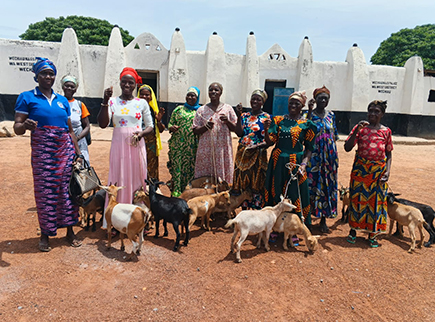
The Community Development Alliance (CDA-Ghana) has presented livelihood support items to 14 former female circumcisers in the Wa West District as part of measures to end the practice of Female Genital Mutilation (FGM).
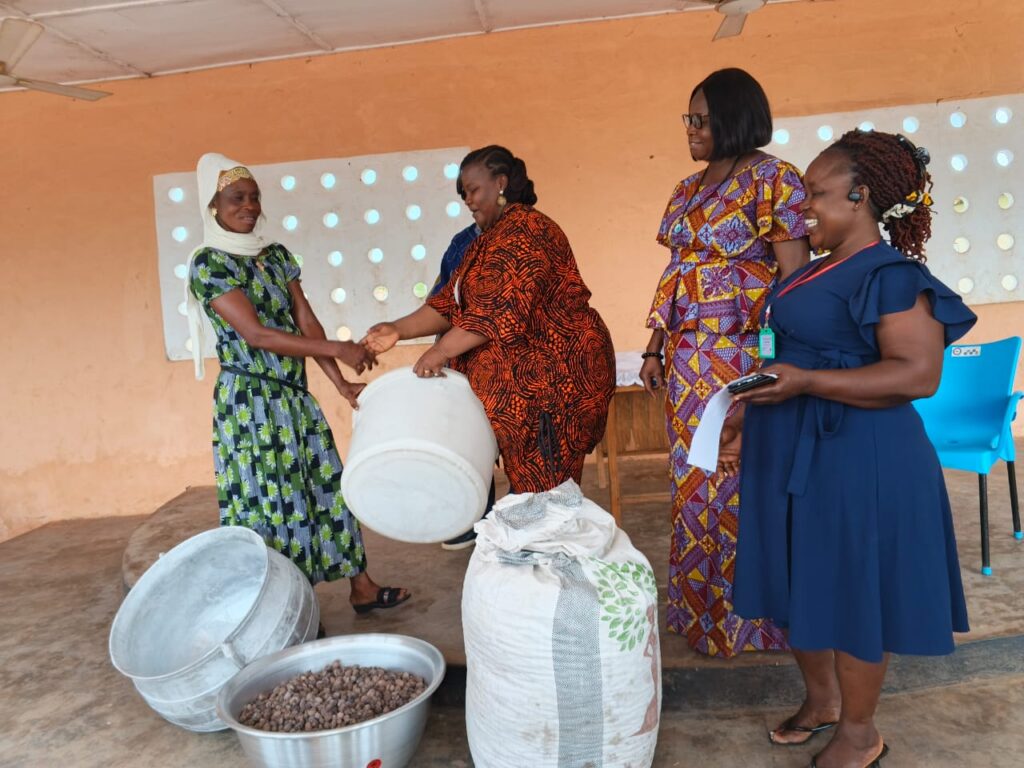
The items, which included goats, pigs, cooking pot, basin, and bag of shea nuts, were to serve as alternative sources of livelihood for them to discourage FGM practice.
The beneficiaries, drawn from communities, including Bankpama, Kantu, Tuolu Domangyili and Zowayeli, among others, received the items after undergoing about three years of sensitisation, training and engagements against FGM.
It formed part of the “Shaping the Future Together Towards Equity, Peace and Change” Project with funding from The Association for the Promotion of Women of Gaoua (APFG), a Non-governmental Organisation in Burkina Faso.
The project is being implemented in Ghana, Senegal, Mali, Burkina Faso and Ivory Coast by members of the West African Network of NGOs against Sexual and Gender Based Violence, with CDA-Ghana implementing it in the Upper West Region.
Speaking at a brief ceremony at Wechiau to present the items, Mr Salifu Issifu Kanton, the Executive Director of CDA-Ghana, said the gesture was also to encourage the women to become anti-FGM advocates in their communities.
“The whole idea is to celebrate you for making a decision to stop FGM in our communities, and to become champions for respecting the sanctity of the female genitalia so that we do not put our children in harm’s way”, Mr Kanton added.
He noted that although FGM remained prohibited under the laws of Ghana, the focus of the intervention was to encourage behavioural change and community ownership in ending the practice.
Madam Charity Batuure, the Upper West Regional Director of the Department of Gender, commended the beneficiaries for abandoning the practice of FGM and embracing new livelihoods.
She also commended CDA-Ghana for complementing the government’s efforts to eliminate FGM in the region and the country in general.
She warned against emerging harmful practices such as the use of hot shea butter to suppress the clitoris of baby girls and said such acts could still result in severe health complications and trauma in the later lives of the victims.
The Gender Director encouraged the women to become agents of change in their communities by discouraging all forms of FGM and harmful cultural practices against girls.
Madam Cecilia Kakariba, the Wa West District Director of Health Services, said FGM poses serious health risks to the victims, including excessive bleeding, infections, complications during childbirth, and psychological trauma.
She, therefore, said CDA-Ghana, in collaboration with the Ghana Health Service, identified the 14 women involved in FGM in the district about three years ago and had since engaged them through training and counselling programmes.
Madam Kakariba expressed hope that the intervention would encourage more practitioners to abandon the practice entirely.
Madam Hajara Gariba, a repented circumciser from Kpanfa, indicated that they engaged in that practice out of ignorance, but that the intervention had exposed them to its negative impact on the lives of the victims.