
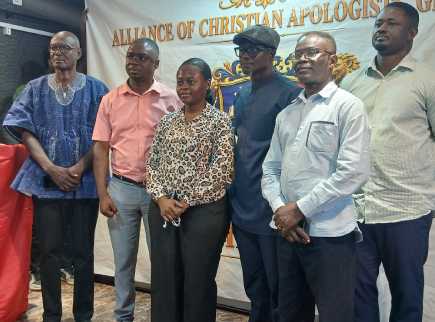
The Alliance of Christian Apologists, Ghana, has called for the equal application of the law in matters involving religious expression, saying no religion, religious leader or community should be above Ghana’s Constitution.
Reverend Kwabena Agyapong, Chairman of the Alliance, said religious criticism, however offensive, should be distinguished from speech that met the legal threshold for criminal conduct, including threats or incitement to violence.
He made the call at a press conference in Accra on the theme: “Religious Freedom, Equal Justice and the Daniel Agyei Case.”
Rev Agyapong said the Alliance’s concern was not about the religious identity of any Ghanaian, but the protection of the constitutional order and the equal application of the law.
“Muslims have the right to practise Islam. Christians have the right to practise Christianity. Traditionalists have the right to practise traditional religion. Atheists have the right to reject religion,” he said.
He said citizens in a constitutional democracy had the right to disagree over religious beliefs and doctrines, adding that such disagreements should not automatically constitute criminal offences.
Rev Agyapong said the Alliance was particularly concerned about the circumstances surrounding the arrest and prosecution of Apostle Daniel Junior Yaw Adjei over statements concerning Prophet Mohammed.
He said the organisation’s investigations indicated that a recording, which allegedly provoked statements by Sheikh Masud Abdullahi on July 24, 2026, was different from a video subsequently published by Apostle Daniel on August 3, 2026.
According to him, the earlier recording was allegedly in the Kotokoli language and involved an individual who had previously identified as a Muslim but subsequently became a traditionalist.
He claimed that Apostle Daniel did not bear the Muslim name associated with the earlier recording, neither spoke Kotokoli nor identified as a Kotokoli, adding that his video was published after Sheikh Masud’s sermon.
Rev Agyapong, therefore, called on the Police to explain the evidence linking Apostle Daniel to the original recording and the legal basis for his arrest.
He said the authorities should state the exact words forming the basis of the alleged incitement, the statutory provision invoked, the evidence relied upon and whether the statement constituted an actual threat or a call for violence.
The Chairman said the same legal standards should apply to all citizens, regardless of their religious affiliation.
“If a Christian crosses the legal threshold, prosecute. If a Muslim crosses the same threshold, prosecute. If a traditionalist or atheist crosses the same threshold, prosecute,” he said.
The Alliance also called for an update on investigations into the alleged assault of Apostle Daniel while in Police custody.
Rev Agyapong said the organisation wanted the authorities to disclose the outcome of investigations into how a civilian allegedly gained access to the suspect, whether any Police officers were found culpable and whether disciplinary action had been taken.
He also called for investigations into alleged restrictions on Christians establishing or operating churches in some communities.
The Alliance said it had documented more than 2,000 videos and recordings, which it described as attacks on Christianity and Christian beliefs, but stressed that it was not asking the authorities to criminalise religious criticism.
“We are asking them to apply the same legal test to everyone,” he said.
He said the Alliance would continue to pursue its concerns through peaceful and lawful means, including public debate, media engagements, petitions, and constitutional and judicial remedies.
“We will not answer religious intolerance with violence. We will not answer intimidation with revenge. We will answer with evidence, law, constitutional action and public accountability,” he said.
Rev Agyapong urged the authorities to prosecute genuine criminal conduct and investigate genuine threats or incitement to violence, while ensuring that criminal law was not used to suppress legitimate religious expression.
“Ghana must remain a free constitutional republic. No religion is above the Constitution. No citizen is below the law,” he said.