
Ghana and Burkina Faso are exploring opportunities for deeper cooperation in public sector reforms, human capital development and responsible adoption of Artificial Intelligence (AI) to improve public service delivery.
The two countries are also seeking to strengthen administrative cross-learning, digital transformation, institutional efficiency and skills development as the nature of work continues to change.
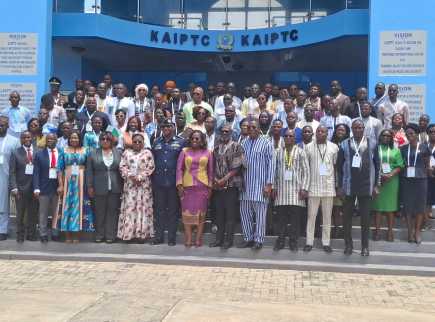
The discussions form part of the 10th edition of HR Café, the flagship annual Human Resource Management forum of the Government of Burkina Faso, underway in Accra.
The conference, the first international edition of HR Café, was opened in on Monday, on the theme: “Shaping the Future of Work: Human Capital, Artificial Intelligence, and Administrative Cross-Learning between Ghana and Burkina Faso.”
It is being hosted by the Office of the President of Ghana, in partnership with the Government of Burkina Faso, of which about 300 participants from Ghana, Burkina Faso and selected partner institutions are attending.
Participants include senior government officials, policymakers, heads of public institutions, chief executive officers, directors-general, human resource professionals, academics, professional associations, civil society organisations, young professionals and the media.
Nana Oye Bampoe Addo, the Deputy Chief of Staff (Administration), Office of the President, said the forum provided an important opportunity for both countries to share experiences, exchange knowledge and develop practical approaches to strengthening public institutions.
She said sustainable public sector transformation could not be achieved through structures, systems and technology alone, but required “capable, ethical, innovative, adaptable people” equipped to lead and manage change.
Madam Bampoe Addo said Ghana’s public sector reform agenda focused on reducing inefficiencies, strengthening transparency and accountability, promoting professionalism, developing human capital and harnessing digital technologies to improve service delivery.
She cited the National Public Sector Reform Strategy II, which includes pillars on developing a capable and disciplined workforce, digitising public sector systems and improving conditions of service.
On AI, Madam Bampoe Addo noted that the technology presented opportunities to improve decision-making, automate routine processes, increase productivity and support data-driven policymaking, but required stronger attention to workforce planning, skills development, ethics and data governance.
“We must, therefore, move beyond asking simply what technology can do, and focus equally on how technology can be used responsibly to build better institutions and improve the lives of citizens,” she said.
The Deputy Chief of Staff said Ghana was already applying digital technologies in public services, citing the digitalisation of passport applications and the Ghana Revenue Authority’s AI-enabled trade valuation platform.
The forum should, therefore, move beyond discussions to generate practical ideas, partnerships and actionable recommendations that could improve public institutions in both countries.
Mr Larry Gabriel Latif Gbevlo-Lartey, the Special Envoy of the President of Ghana to the Alliance of Sahel States, said the hosting of the conference in Ghana demonstrated the enduring relations between the two countries.
Ghana and Burkina Faso shared history, aspirations and a common destiny, making cooperation in areas such as human resource management and public administration important to their development, he added.
Mr Ousmane Sandwidi, the Head of the Burkina Faso Organising Committee, described the conference as historic and commended Ghana for hosting the event.
He said the outcome should help the two countries to advance knowledge and skills-sharing and strengthen public sector governance.
The HR Café is designed to bring together human resource practitioners, policymakers, academics and other stakeholders to exchange ideas, experiences and innovations in human resource management.
The 2026 edition seeks to use the Ghana-Burkina Faso partnership to deepen professional exchanges and institutional learning, while examining how human capital and emerging technologies can shape more efficient, accountable and citizen-centred public services.
The programme includes expert sessions on human resource management and public sector transformation, as well as visits to selected Ghanaian institutions to promote practical cross-learning between participants from the two countries.