
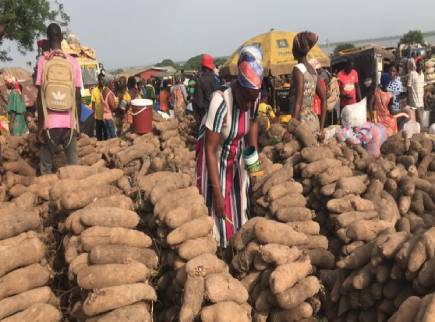
Across the vast farming communities of the Oti Region, yam cultivation is more than just an agricultural activity.
The Yam Basket of Ghana
It is notable as the backbone of economic survival for thousands of families. Districts such as Nkwanta South, Nkwanta North, Krachi West and Krachi Nchumuru consistently produce large volumes of yam, earning the region its reputation as Ghana’s “yam basket.”
Markets That Drive Trade
At the centre of this thriving trade are the Dambai, Kpassa, Nkwanta and Banda markets. Buyers and traders from across the country converge during harvest seasons to purchase yam in bulk for distribution to urban centres. The yam business has become a major economic driver, creating jobs for farmers, transport operators, labourers, traders, and food vendors.
Roads That Threaten Livelihoods
Despite impressive production, poor feeder roads remain a major challenge. Farmers in Krachi Nchumuru and Krachi East lament that transporting yam from farms to markets is costly and unreliable, especially during the rainy season. “Our road network needs urgent rehabilitation. Sometimes the yams rot before reaching the market,” said Mr Yaw Joseph, a farmer at Zongo-Macheri.
Motorcycles, often the main means of transport, suffer frequent breakdowns on rough roads, increasing costs and reducing profits. Farmers like Mr Tia Moses of Kparekpare say transportation expenses now consume a large share of their earnings.
Production Figures That Impress
According to Oti Regional Director of Agriculture, Mr O’Brien Nyarko, provisional figures for 2024 show the region produced 873,215 metric tons of yam. Nkwanta South led with 260,291 metric tons, followed by Nkwanta North with 223,844 metric tons. Krachi West produced 210,065 metric tons, while Krachi Nchumuru recorded 105,729 metric tons.
These figures confirm Oti’s dominance in yam cultivation, supporting commercial activity in major markets and contributing significantly to national food security.
Market Infrastructure Needs
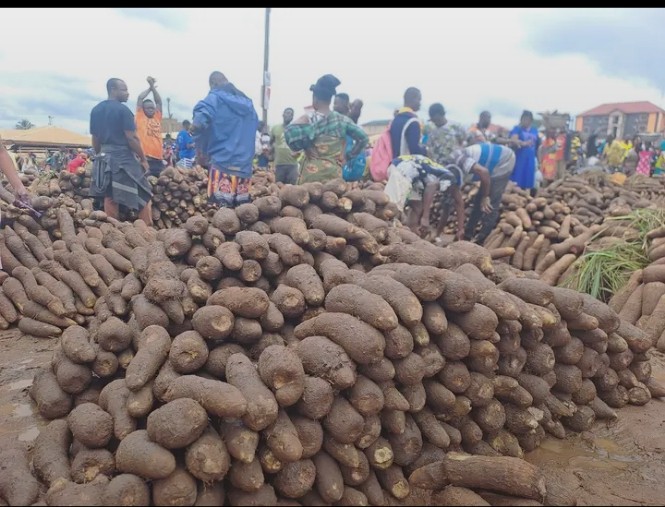
While production is strong, market facilities lag behind. Bulk buyer Mr John Tindo, who transports yam from Dambai to Sunyani and Bono Region markets, appealed for modern sheds and storage facilities. “Thousands of tubers are exposed to sun and rain, which affects quality and value. A well-planned market infrastructure would preserve produce and improve trading conditions,” he explained.
Traders like Madam Sophia Abena Forwaa also stressed that poor roads and rising fuel costs prolong travel times and damage produce. “By the time we reach the market, some yams are bruised or spoiled, forcing us to sell at lower prices,” she said.
Revenue and Economic Impact
The Dambai market generates substantial revenue for the Municipal Assembly, particularly between July and September, when early-maturing varieties such as “Kpena” and “Labakor” dominate sales. Deputy Coordinating Director Mr Yaw Kanjo noted that the Assembly earns between GHS3,000 and GHS4,000 weekly during off-season, rising to over GHS5,000 at peak.
Call for Action
Stakeholders believe that investing in feeder roads and market infrastructure would reduce post-harvest losses, lower transportation costs, and strengthen Oti’s position as Ghana’s yam basket. Farmers and traders are appealing to the Oti Regional Coordinating Council, the Department of Feeder Roads, and district assemblies to prioritise rehabilitation projects.
Such interventions, they argue, would not only support agricultural production but also stimulate economic growth, create employment, and reinforce food distribution networks nationwide.