
The Upper East Region has unveiled an ambitious 10-year development blueprint aimed at mobilising about GH¢8.6 billion in investments to transform the region’s economy.
The plan, dubbed the “PEARL Framework – Prosperity through Enterprise, Agriculture and Regional Livelihoods,” seeks to promote inclusive growth and sustainable development through enterprise development, agriculture, infrastructure expansion and improved livelihoods.
Spanning 2026 to 2035, the framework was launched at the opening of a three-day Upper East Regional Development and Business Forum and Exhibition in Bolgatanga.
Speaking at the ceremony, the Upper East Regional Minister, Mr Akamugri Donatus Atanga, said the investment package would be financed through Government of Ghana allocations, revenues from responsible mining, contributions from citizens at home and abroad, development partners, and private sector participation.
He explained that the PEARL Framework serves as a strategic roadmap to unlock the region’s economic potential, create jobs, attract investment and build a resilient, inclusive regional economy.
“For far too long, conversations about the Upper East Region have focused largely on our challenges. While we acknowledge these realities, they do not define us.
“Our true identity lies in the resilience of our people, the productivity of our farmers, the ingenuity of our entrepreneurs, the richness of our culture, the abundance of our natural resources, and the immense opportunities that await strategic investments.
“Today, we are redefining the narrative of the Upper East Region. It is this conviction that inspired the PEARL Framework, a bold 10-year development and investment blueprint to mobilise partnerships, attract investment, create jobs, improve livelihoods, and build a prosperous, resilient, competitive and inclusive regional economy,” he said.

Mr Atanga said the framework would be validated and refined during the forum to ensure it reflects the aspirations and priorities of people across all 15 districts of the region.
He noted that the discovery of commercial quantities of gold in 10 districts, along with the emergence of large-scale mining companies such as Cardinal Namdini Mining Limited, Earl International Gold Limited, and Maripoma Mining Services Limited, presents a unique opportunity for industrial transformation.
However, he stressed that the framework seeks to ensure that mineral wealth translates into broad-based development rather than overreliance on mining.
“The mineral wealth beneath our soil must become a catalyst for broad-based prosperity across agriculture, health, education, infrastructure, enterprise development, and improved livelihoods for every household in our region,” he stated.
The Regional Minister said the framework prioritises investments in agriculture, agribusiness, renewable energy, manufacturing, tourism, housing, logistics, technology and cross-border trade, positioning the region as a competitive destination for responsible investment.
Among the flagship projects under consideration are the completion of the Tamne Irrigation Dam, rehabilitation of the Tono and Vea irrigation schemes, revitalisation of the Pwalugu Tomato Factory and the Zuarungu Meat Processing Factory, and transformation of the Fumbisi Rice Valley into a commercial agricultural and agro-industrial hub.
Other proposals include establishing an Agricultural Technical University at Sandema, developing a drone and satellite remote sensing programme, upgrading the Upper East Regional Hospital and the War Memorial Hospital into teaching hospitals, elevating the Bawku Hospital to referral status, and establishing a medical school at the University of Applied Sciences and Technology in Navrongo.
Mr Atanga called on investors, development partners, financial institutions and businesses to partner with the region in implementing the framework.
“Our message today is simple and unequivocal: the Upper East Region is open for business. We are ready to partner, innovate, invest, and work collaboratively with all stakeholders to build a dynamic, resilient and competitive regional economy,” he said.
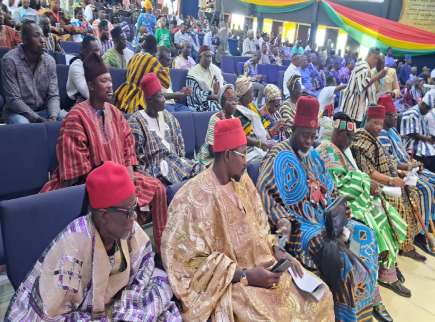
The forum brought together government officials, state and non-state institutions, investors, private sector actors and traditional authorities to deliberate on and validate the 10-year development plan.