
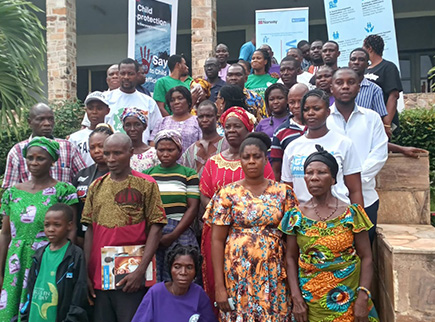
Mrs Susan Temley Akortia, Adaklu District Director of the Department of Social Welfare and Community Development, has stated that the best interest and safety of children must always be the primary consideration in every decision-making process.
She said every child deserved safety, dignity and care, therefore, the need for stakeholders to prioritise their protection at all times.
Mrs Akortia made the statement during a day’s workshop organised by Friends of Adaklu, a non-governmental organisation in the Adaklu District, for Community Child Protection Committee members drawn from four electoral areas.
The workshop was on the theme: “Strengthening Community Child Protection System for Effective Management, Coordination and Sustainable Reintegration.”
It was sponsored by SOS Children’s Villages and International Justice Mission (IJM).
According to Mrs Akortia, a 2024 UNICEF/WHO survey indicates that one in five girls experienced sexual violence before the age of 18, while one in seven boys also suffered similar abuse.
She said this underscored the importance of strengthening child protection systems to safeguard children, support victims and ensure that perpetrators were punished.
The Director noted that without proper systems, many cases of sexual abuse could go undetected, allowing offenders to escape justice.
She said abused children often suffered long-term physical, psychological and developmental harm.
Mrs Akortia urged participants to identify early warning signs of abuse before situations escalated.
She listed the signs as unexplained bruises, burns or cuts, injuries inconsistent with explanations, frequent injuries, malnutrition, and sudden withdrawal or aggression.
Other indicators, she said, included regression, fear of specific adults or places, age-inappropriate sexualised behaviour, flinching at sudden movements, persistent sadness, low self-esteem or hopelessness, nightmares, sleep disturbances, extreme mood changes, and talks of self-harm or suicide.
Mrs Akortia noted that child abuse could stem from factors such as harsh disciplinary practices, lack of supervision, domestic violence, substance abuse by caregivers, and economic hardship.
She emphasised that evidence-based documentation was important in protecting children legally and ensuring perpetrators were held accountable through due process.
The Director also highlighted several government programmes aimed at supporting vulnerable populations, including the National Health Insurance Scheme, School Feeding Programme, Livelihood Empowerment Against Poverty (LEAP), and the Integrated Social Services Initiative.
She mentioned other interventions such as the Complementary Livelihood Asset Support Scheme, Livelihood Empowerment and Productive Inclusion Programme, and Labour-Intensive Public Works.
Mrs Akortia urged the public to take advantage of these programmes to improve their livelihoods and help reduce child abuse in society.
Topics discussed at the workshop included identification, documentation and referral pathways, collaboration with the Department of Social Welfare on rehabilitation and reintegration, access to government support schemes, community engagement, and tracking and reporting on child protection issues.