
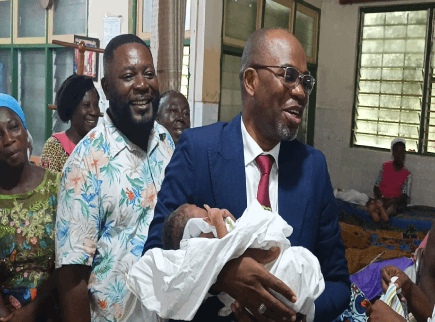
The United Nations Population Fund (UNFPA), and the United Nation’s Sexual and Reproductive Health Agency, has collaborated with the Mercy Women Catholic Hospital in Mankessim to undertake free surgical repairs for some 30 women suffering from obstetric fistula.
The Women, mobilised from across the country, have been living with the painful condition for varied periods, suffering years of stigmatisation and ostracism from their various communities.
After careful medical examinations, they will undergo surgical procedures at the hospital’s specialised fistula unit to give them a normal life and reintegrate them into society.
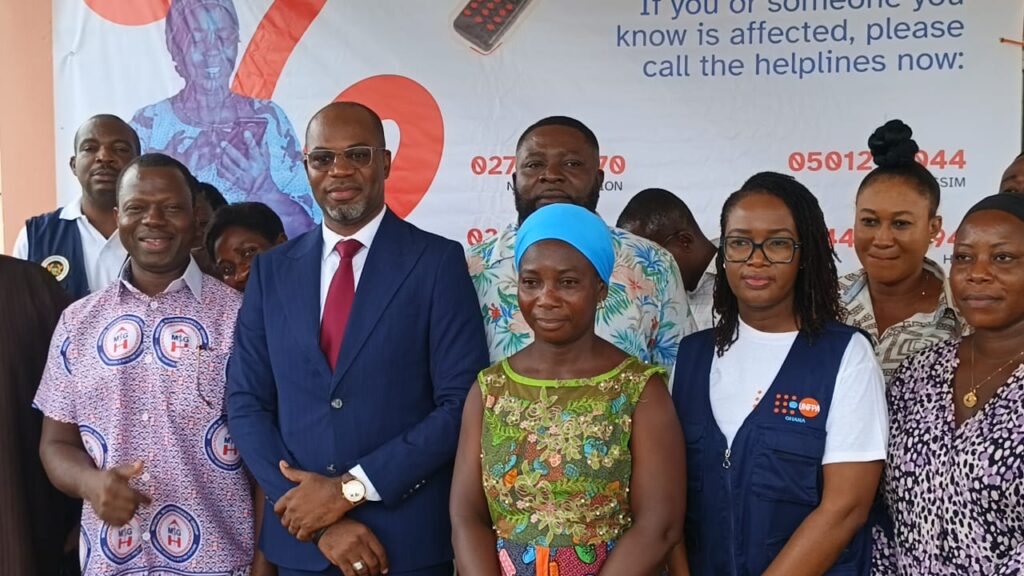
The exercise forms part of the hospital’s routine quarterly fistula repair sessions.
Obstetric fistula is a devastating but preventable childbirth injury which creates an abnormal opening between the vagina and the bladder or rectum, usually caused by prolonged, unrelieved obstructed labour.
It leaves women with continuous and uncontrollable leakage of urine or stool, social isolation, and, in most cases, the loss of their babies.
According a UNFPA report, Ghana records roughly 798 to 894 new obstetric fistula cases every year but with an extremely low repair rate.
Between 2016 and 2025, as many as 3,688 cases were seen across various health facilities but only 1,096 were repaired, the report indicated.
As a long-time partner, the UNFPA supports the exercise with beds and other equipment, research and data gathering, awareness creation, patient mobilisation and direct sponsorships for some repairs as part of an agenda to end fistula in Ghana by 2030.
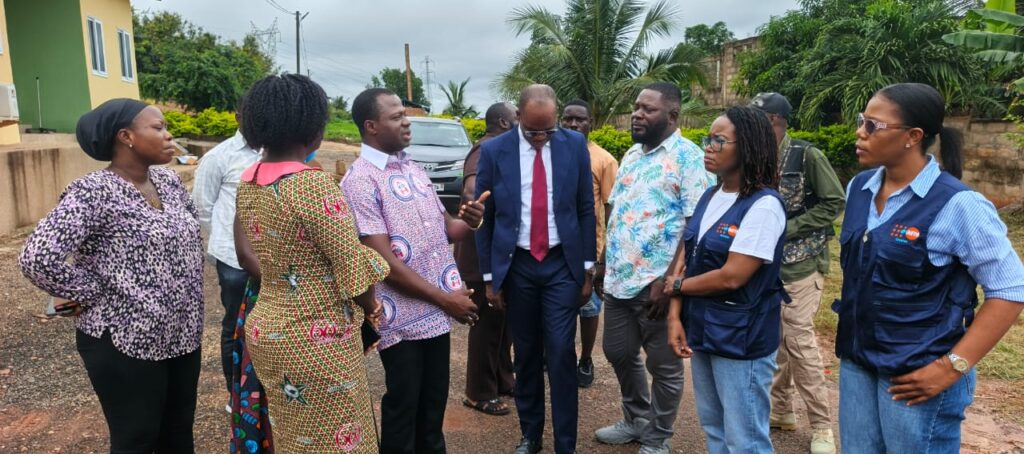
During a working visit to the fistula facility by the UNFPA and some partners on Thursday, Dr Joseph Langa Berko, the Acting Medical Director for the Mercy Women Catholic Hospital, dispelled the belief that fistula was a curse or God’s punishment to cheating partners.
He explained that it was purely a medical condition which could happen to any woman by accident, urging the public to stop stigmatising patients.
He noted that the major challenge of the fistula repair campaign was finding the patients because many felt shy about their condition or were ignorant about the availability of care.
“Last year, we operated on over 130 patients, and did over 120 last two years. This year, we are expecting to operate on over 130 or up to 140.
“Research has shown that between 500 to 800 new cases are added on to the backlog, but the question is, where are they? we are looking for them to operate on them and it is for free when we identify them,” he said.
Even though obstetric fistula occurred largely through childbirth, Dr Berko explained that it could happen through rape, complex surgical procedures and other factors.
He emphasised that the condition was curable but some cases were inoperable while others needed more advanced procedures to repair.
He said the facility, together with UNFPA and other partners, had intensified sensitisation on the condition to get more patients to seek help.
Dr Ebenezer Prince Arhin, the Member of Parliament (MP) for Mfansteman and associate of UNFPA, expressed similar sentiments about the difficulty in finding patients, stressing the need more advocacy.
He also condemned the stigmatisation of patients, reiterating the fact that it was a medical condition which required love and social support for patients.
He recounted how a partner had journeyed through the agonising experience with his wife living with the condition for several years, urging all men to emulate that example.
“Nobody should shy away from a sister, a friend, a mother or auntie who has the condition that makes it difficult for her to have natural passage of urine and other things because of childbirth,” the MP said.
Dr Arhin indicated that the exercise was also a training opportunity for Ghanaian surgeons, while expressing his unwavering commitment to the fistula campaign.
Dr Emmily Naphambo, the Deputy Representative of UNFPA, underscored the Agency’s role in combatting fistula over the years, indicating that the project had moved from occasional fistula clinics to undertaking routine surgeries.
Addressing the challenge of identifying patients, she noted that UNFPA was supporting government, the Ministry of Health, the Ghana Health Service, and partners like the Mercy Hospital to find and mobilise the women.
“We create awareness and make men and everybody in the community aware that fistula can actually be cured.
“That’s why there are facilities like this, where you bring specialists who are there to repair so that the women can be given back their dignity,” she explained.
“It is really about giving back dignity because if you go through the ward and look at these women, it is very pathetic and very sad to see someone who has lived with the condition for 48 years,” she added.
Dr Naphambo emphasised the need for women to prioritise their maternal health, urging them to seek medical care on time.
“Our women should please seek medical care on some of the things that they see postpartum because it is normal.
“It is part of who we are as human beings and therefore, we should not shy away from seeking care,” she said.
Madam Esther Kwabena, a 25-year-old patient from Wa, narrating her ordeal to the Ghana News Agency (GNA), stated that she had been abandoned by her husband and completely ostracised by her community who suddenly stopped buying her porridge.
“I get wet unexpectedly and so I cannot we go to a public place. I feel very sad and embarrassed about my situation,” she said.
“But they are treating me very well. At home, I use rag as diapers but I am given real diapers here,” she said.
She expressed her preparedness to undergo the procedure and be integrated into her community.