
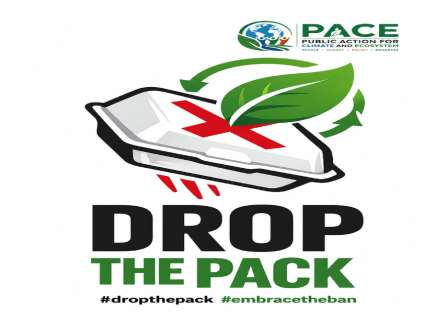
The Public Action for Climate and Ecosystem (PACE), a student-led social movement, has launched a nationwide campaign urging Ghanaians to phase out Styrofoam food packs ahead of the government’s planned 2027 ban on Expanded Polystyrene (EPS) packaging.
The campaign, branded “Drop the Pack”, seeks to raise public awareness of the ecological and health dangers posed by Styrofoam, which persists in the environment for over 500 years and releases toxic chemicals when used to serve hot food.
In a statement issued by the Communication Team on Sunday, June 12, 2026, the PACE warned that the convenience of takeaway boxes came at a hidden cost, clogging drainage systems, fueling floods in Accra and Kumasi, and polluting Ghana’s oceans.
The movement emphasised that alternatives already existed; noting that biodegradable paper packs, traditional plantain and banana leaves, and reusable lunch boxes are being promoted as eco-friendly substitutes.
According to PACE, while eco-packaging currently costs 20–35 percent more than Styrofoam, the long-term expense of clearing gutters, treating plastic-related illnesses, and managing environmental degradation far outweighs the short-term savings.
The PACE announced that it was rolling out a 55-day advocacy drive that combines digital campaigns such as “The Foam Files” and “The 2027 Countdown” with grassroots engagements.
Community durbars, radio partnerships, and town-hall meetings with Market Association Queens will ensure vendors are not left behind.
Those who commit to eco-friendly packaging will be recognised as “PACE Champions,” receiving branding to attract environmentally conscious consumers.
The Government of Ghana has announced that by 2027, Styrofoam packaging will be banned nationwide as part of efforts to reduce plastic pollution.
The ban is expected to drive a shift towards biodegradable and reusable alternatives.
Environmental experts have long warned that Styrofoam contributes to flooding, marine pollution, and health risks through toxic chemical exposure.
The PACE, made up of MA Development Communication students from the University of Media, Arts and Communication, says the time to pivot is now.
The advocacy group is calling on policymakers to subsidize eco-friendly raw materials, manufacturers to retool factories, and consumers to make conscious daily choices at food stalls.
“Our lunch boxes outlive our grandchildren,” the campaign declares. “Dropping the pack today means protecting Ghana’s future,” it adds.