
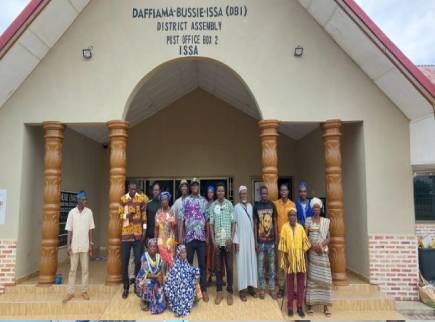
Members of the Multi-Stakeholder Platform (MSP) in the Daffiama-Bussie-Issa (DBI) District have received training in safeguarding, budget accountability and inclusive decision-making to strengthen advocacy for farmers and improve participation in local governance processes.
The training formed part of the implementation of the project titled, “Strengthening Farmers’ Voices to Promote Accountability and Inclusive Decision-Making in Ghana,” with support from the Star Ghana Foundation.
Participants included representatives from the DBI District Assembly, PFAG district executives, civil society organisations, processors, aggregators, traditional authorities, as well as youth and women groups.
A statement issued in Accra said the MSP was established under the project to facilitate engagement between duty bearers and rights holders; address challenges affecting smallholder farmers and promote inclusive governance and accountability at the local level.
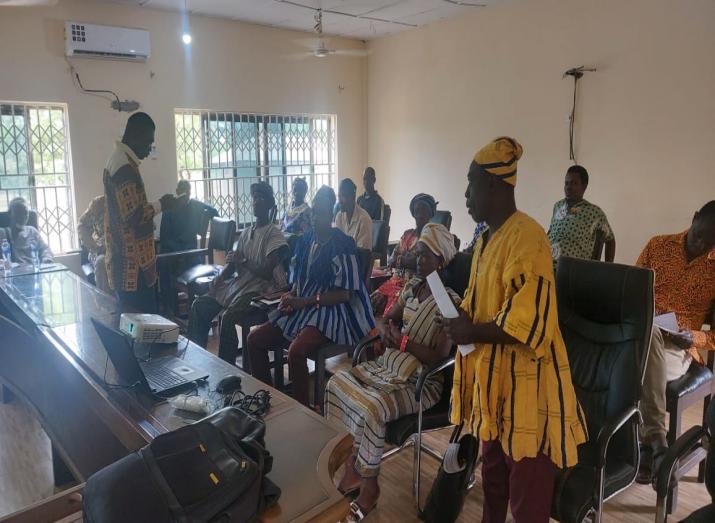
Dr Roger Akanbisik, who facilitated a session on safeguarding and inclusive engagement, took participants through principles of safe, respectful and inclusive participation in community and development activities.
He said there was the need to protect children, vulnerable adults, and marginalised groups from abuse, exploitation, and discrimination.
He urged members of the platform to ensure that safeguarding concerns were reported and addressed promptly, confidentially, and with dignity to build trust and confidence among community members.
A major highlight of the programme was the presentation of an analysis of the 2026 DBI District Assembly Composite Budget by Dr Benjamin Sarfo, Programmes Officer of PFAG.
The analysis revealed that although agriculture remains the backbone of the district’s economy, employing about 78 per cent of the active population, the sector received only 8.8 per cent of the district’s total budget allocation, compared to infrastructure’s 44.0 per cent, social services’ 37.6 per cent and management and administration’s 16.6 per cent.
Dr Benjamin Sarfo, Programmes Officer of PFAG noted that 77 per cent of the agricultural budget allocation was earmarked for capital and operational expenditure, largely funded by development partners, while 23 per cent was allocated to salaries.
He observed that key agricultural priorities, including post-harvest storage facilities, farm input support, dedicated funding for women farmers, farmer-based organisation support, climate-smart agriculture investments and Good Agricultural Practices, had no specific budget allocations.
Using the findings as an advocacy tool, Dr Sarfo encouraged MSP members to engage local authorities and demand increased investment in agriculture to improve productivity and livelihoods.
He also equipped participants with advocacy tools and frameworks, stressing that effective advocacy messages must be clear, evidence-based, solution-oriented, and respectful to influence decision-makers and promote accountability.
Mr Vincent Lawie Bonzo, Lead Convener of the MSP in the DBI District described the training as an eye-opener, saying it was the first time he had gained insight into how the district’s composite budget was prepared and the relatively low allocation to agriculture.
Mr James Wor, District Chief Executive for DBI, commended PFAG for the initiative and encouraged participants to monitor projects and programmes using PFAG’s scorecard.
He assured them that the Assembly remained open to constructive criticism and greater stakeholder participation.
Participants expressed satisfaction with the training and pledged to work together to ensure that the concerns and priorities of farmers were adequately reflected in district development plans and budget allocations.