
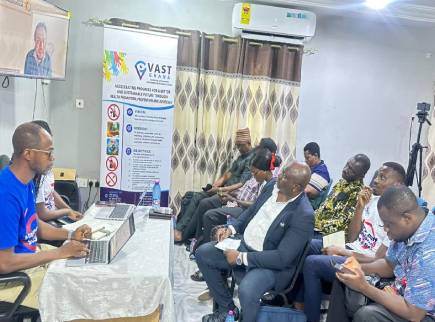
The Vision for Accelerated Sustainable Development (VAST Ghana) has urged the Government to begin national processes toward implementing Article 19 of the World Health Organization (WHO) Framework Convention on Tobacco Control (FCTC).
The organisation said Article 19 reflects the “polluter pays” principle, stressing that tobacco companies should be held accountable for health and environmental damages caused by their products, like industries held responsible for environmental pollution.
It noted that the decision adopted at the 11th Session of the Conference of Parties (COP11) provides renewed momentum and guidance for countries to pursue liability measures against the tobacco industry, marking a shift from product regulation to corporate accountability.
VAST Ghana also called for stronger enforcement of Article 5.3 of the WHO FCTC, which protects public health policies from tobacco industry interference, warning that accountability measures cannot succeed without such safeguards.
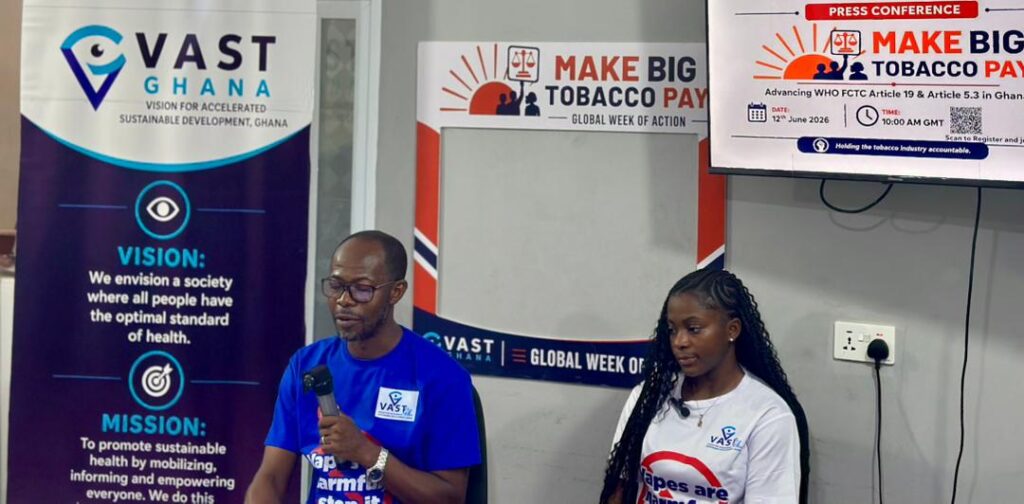
Mr Labram Musah, Executive Director of VAST Ghana, made the call at a press conference held to launch the Global Week of Action under the “Make Big Tobacco Pay” campaign by Corporate Accountability, a global movement. The engagement also aimed to sensitize government officials, policymakers, and the media on the COP11 decision on FCTC Article 19, as part of VAST Ghana’s advocacy campaign.
He stated that tobacco use causes more than eight million deaths globally each year, including cancers, cardiovascular diseases, chronic respiratory diseases, stroke, and diabetes-related complications. In Ghana, he said, it accounts for about 6,700 deaths annually, representing approximately three per cent of total deaths.
Mr Musah added that smoking-related illnesses cost Ghana about GH¢668 million each year in healthcare spending and lost productivity. He emphasized that tobacco companies should contribute to healthcare costs and environmental cleanup, arguing that industries causing harm must be held accountable.
He called on government, policymakers, development partners, civil society, and citizens to support efforts to strengthen accountability, protect public health, safeguard the environment, and promote healthier futures.
Mr Daniel Dorado Torres, Tobacco Campaign Director at Corporate Accountability, said the Global Week of Action aims to mobilize global support for governments to make tobacco companies pay for societal harm.
He noted that the tobacco industry generates about US$880 billion in annual revenue, while global economic losses from tobacco use are estimated at US$1.4 trillion each year. He added that tobacco use causes about eight million deaths annually, including over 1.2 million non-smokers exposed to second-hand smoke.
Mr Torres also highlighted environmental impacts and warned that about 40 million adolescents aged 13 to 15 worldwide currently use tobacco products. He urged governments to fully implement the WHO FCTC and adopt liability measures to hold the tobacco industry accountable for its impacts.